Department of Commercialization of Scientific and Innovative Developments
Operating under Uzbekistan’s laws and presidential decrees, the department oversees the commercialization of scientific research and innovations. It analyzes market demands, assesses profitability, attracts investors and partners, and facilitates integration with industrial enterprises.

Activities of the Department for Commercialization of Scientific and Innovative Developments
The Department for Commercialization of Scientific and Innovative Developments was established based on the Decree No. 3698 dated May 7, 2018, issued by the President of the Republic of Uzbekistan, titled “Additional Measures for Improving the Mechanisms of Introducing Innovations in Economic Sectors.” The department operates in accordance with the laws of Uzbekistan, directives from the Ministry of Higher and Secondary Specialized Education, other government agencies, and international agreements.
The department is responsible for commercializing scientific-innovative developments and research results belonging to the university. It systematically analyzes the market demand for innovative products (works, services), evaluates profitability, selects projects ready for commercialization, and attracts investors and industrial partners for implementation and production.
Key functions of the department:
Involving professors, researchers, doctoral candidates, students, and foreign experts in funded scientific research and providing educational and scientific services to customers.
Preparing and submitting documents for patenting intellectual property and registering it both domestically and internationally.
Preparing and managing contracts with intellectual property authors and monitoring contract fulfillment.
Coordinating the transfer of intellectual property rights in cooperation with other university units.
Collecting, storing, and maintaining databases on scientific developments and innovation project results.
Conducting expert evaluation and analysis of innovation and ITF results to identify key competitive developments.
Developing recommendations for managing intellectual property rights throughout all stages of the innovation cycle.
Providing consultations on technology transfer, business plan preparation, legal protection of ITF results, and searching for potential investors.
Detecting unauthorized use of intellectual property and proposing measures to eliminate violations and compensate damages.
Assisting in protecting both property and personal non-property rights of authors.
Organizing seminars and training sessions on intellectual property for university staff.
Preparing budget proposals related to inventions, patent-license activities, innovative entrepreneurship, and technology transfer.
Developing documents related to the creation, use, and protection of intellectual property objects.

Alimkulov Jamshid Bakhtiyorovich
Head of the Department of Commercialization of Scientific and Innovative Developments










Diyorbek Bobajanov Ruzmat ugli
Engineer of Scientific Research
McS
- Phone: +998974227832
- Email diyorme150@gmail.com
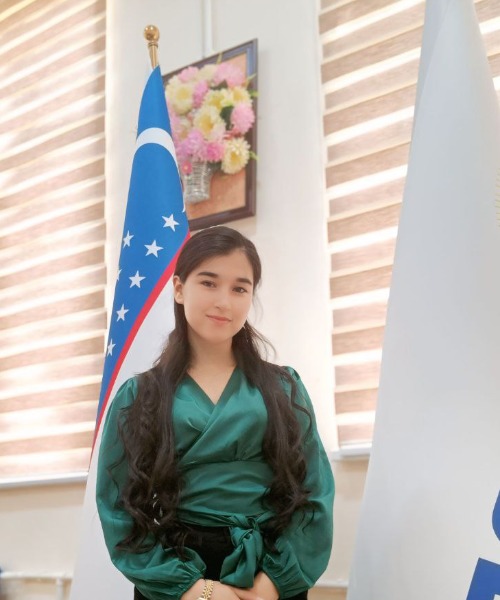
Munisa Razokberdieva
Research Engineer
- Phone: +998949317440
- Email mrazoqberdieva@gmail.com

Oxunjon Yusupxo’jayev Shuxrat o’g’li
Scientific research engineer
- Phone: +998944095303
- Email yusupxojayevoxunjon@gmail.com
Scientific and Research Resources
- German Academic Exchange Service (Natural Sciences)
- German Research Foundation
- KA171 (International Credit Mobility)
- ProQuest Pivot Research Professional
- USA – CRDF Global
Winning Foreign and Local Grants and Participating in Projects
Grants are financial support allocated to fund research, innovative projects, or social programs. To successfully win foreign and local grants, it is recommended to follow these key steps:
- Clearly define the project idea: Before applying for a grant, ensure that your project’s goals, significance, and expected outcomes are clear and understandable.
- Study grant programs: Carefully examine local and international grant organizations, their criteria, application deadlines, and requirements.
- Prepare the application: The grant application is a crucial document for presenting your project. Prepare it thoroughly, clearly, and in an organized manner.
- Establish collaborations: Collaborating with experts, researchers, or organizations in the project increases the chances of success.
- Prepare a financial plan: Create a detailed budget showing how the grant funds will be used.
- Monitoring and reporting: It is necessary to monitor the project’s progress and provide reports to the grant-giving organization.
Additionally, it is important to pay attention to grants announced by various international foundations, governments, and private organizations, and submit applications in accordance with their requirements.
Grants Awarded