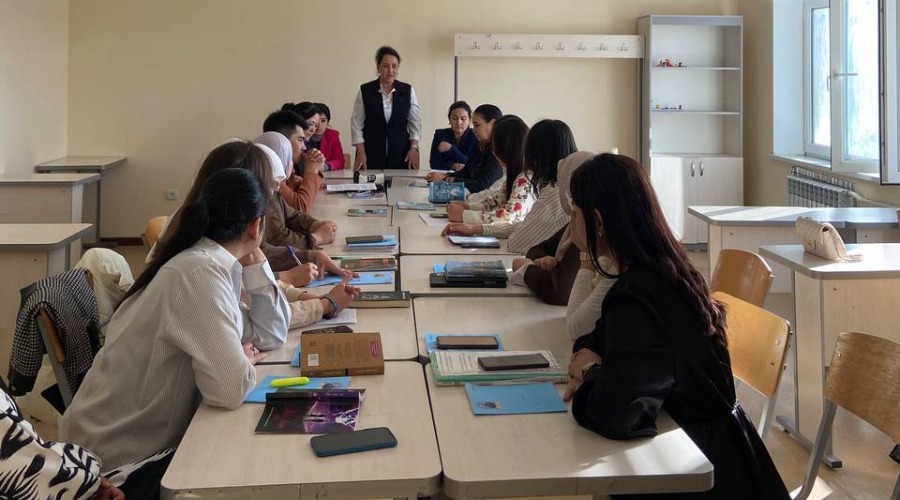
About the Department The "General Pedagogy" Department was established in 2020, separating from the "Pedagogy and Management" department within the Faculty of Pedagogy. By order of the Institute Rector dated January 4, 2020, the department was named "General Pedagogy." Currently, the department is involved in teaching specialized subjects for 2nd-year pedagogy students, as well as general pedagogy and trends in continuous education for all specializations.
Mission and Goals The core mission of the "General Pedagogy" Department is to train qualified specialists based on modern pedagogical science and innovative technologies, to enhance the quality and effectiveness of education, to develop scientific research, and to cultivate accomplished pedagogues for society. Our key goals include:
- Improving the quality and effectiveness of pedagogical education through professionally oriented programs and advanced pedagogical methods.
- Expanding international cooperation with the scientific community, international universities, and educational projects in the field of pedagogy.
- Developing into a scientific center for general pedagogy, neuropedagogy, and educational innovations.
- Implementing neuropedagogy and innovative educational technologies (neurofeedback, digital learning platforms, and interactive methods) to enhance the educational process.
Curricula The department offers courses in General Pedagogy for bachelor's degree students.
- 2nd-year Curricula (60110100 – Pedagogy, 60111000 - Pre-conscription Military Education): General Pedagogy, Family Pedagogy, Creative Pedagogy, Pedagogical Skills, Introduction to Specialization, Foundations of National Education, Social Pedagogy, Comparative Pedagogy, Pedagogy Theory and History, Methodology of Teaching the Science of Education, Trends and Modern Approaches in Continuous Education, Folk Pedagogy, Yunagogy, Diagnostics and Correction of Educational Activities.
- 3rd-year Curricula (For all specializations): General Pedagogy.
- Master's Specialization (70610105 – Information Technologies in Education): Scientific Seminar, Scientific Research Methodology, Pedagogical Competence, Pedagogical Scientific Research Methodology (Neuropedagogy).
Scientific Research Directions and Projects The General Pedagogy Department is actively engaged in scientific research across several strategic areas. These directions aim to conduct research that meets modern educational demands, expand collaboration with national and international scientific communities, and achieve practical outcomes.
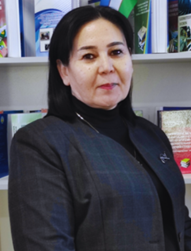
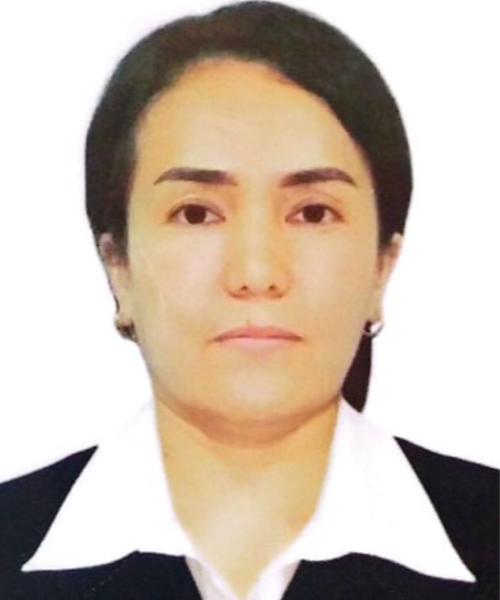
Head of the Department of General Pedagogy
Associate Professor (acting)
PhD – Doctor of Philosophy in Pedagogical Sciences
The Department of “General Pedagogy” has been regularly establishing local collaborative relationships with the aim of improving the quality of education, developing modern pedagogical methods, and providing additional knowledge to school students and vocational education learners. In this regard, projects aimed at enhancing the teaching and educational process are being implemented in cooperation with general education schools in the Tashkent region.
Significance of Collaboration
Collaborative relations play an important role in increasing the effectiveness of pedagogy and improving the educational process. In the field of general pedagogy, exchanging experiences with various educational institutions, educators, researchers, and community representatives, conducting joint scientific research, and applying modern pedagogical approaches in practice are among the department’s priority directions.
Main Directions of Collaborative Relations
Experience Exchange Between Educational Institutions
Systematic relations have been established with schools, colleges, and higher education institutions.
During the process of experience exchange, advanced pedagogical technologies are implemented in practice, enhancing the effectiveness of education.
Collaboration with Silk Road Innovations University
Collaborative relations have been established with the Department of “Pedagogy, Psychology, and General Education Sciences.”
Professors and lecturers regularly participate in programs for academic and scientific experience exchange and implement joint research and educational projects.
Collaboration with South Kazakhstan University
A bilateral agreement has been signed with the university.
The ChDPU delegation visited South Kazakhstan University and held productive meetings to further develop cooperation.
Collaboration with Shakhrisabz State Pedagogical Institute
Within the framework of collaboration with the institute’s Faculty of Pedagogy, efforts are focused on improving the quality of education, implementing advanced pedagogical technologies, and developing scientific research activities.
Individual Learning and Research Activities at the Department of General Pedagogy
The Department of General Pedagogy has established a high-level individual learning environment, expanding opportunities for students to conduct independent research and engage in scientific activities. Students can initiate scientific investigations based on their academic interests and carry out research collaboratively with department professors through a special electronic platform for application submissions. This facilitates early engagement of students in scientific work.
Professors and lecturers of the department have developed specialized scientific tablets and tools designed for working in an individual learning environment to engage students and young researchers in scientific activities. These methodological tools help form students’ research skills, strengthen their abilities to conduct investigations, and integrate theoretical knowledge with practical activities.
Additionally, students have opportunities to present their scientific articles, small-scale research projects, and innovative ideas at national and international scientific-practical conferences, grant projects, and various academic forums. This process not only develops their scientific potential but also promotes their integration into the modern scientific community.
The main mission of the department is to prepare qualified specialists based on modern pedagogical science and innovative technologies, enhance the quality and effectiveness of education, develop scientific research, and train competent educators for society. The primary objectives are:
Improving the quality of pedagogical education through professionally oriented programs and advanced pedagogical methods.
The department offers courses in General Pedagogy for undergraduate students.
2nd-year programs (60110100 – Pedagogy, 60111000 – Pre-military training): General Pedagogy, Family Pedagogy, Creative Pedagogy, Pedagogical Mastery, Introduction to Specialization, Basics of National Education, Social Pedagogy, Comparative Pedagogy, Theory and History of Pedagogy, Methodology of Teaching Educational Sciences, Trends and Modern Approaches in Lifelong Education, Folk Pedagogy, Yunogogika, Diagnostic and Corrective Work in Educational Activities.
3rd-year programs (for all educational directions): General Pedagogy.
Master’s program (70610105 – Information Technologies in Education): Scientific Seminar, Research Methodology, Pedagogical Competence, Pedagogical Scientific Research Methodology (Neuro-pedagogy).
Research Directions and Projects
The Department of General Pedagogy conducts research aligned with modern educational requirements, aims to expand collaboration with national and international scientific communities, and works in strategic directions focused on achieving practical outcomes.
Musurmonov Rakhmatilla completed a Doctor of Science (DSc) dissertation entitled “Scientific and Pedagogical Foundations for Improving Educational and Upbringing Activities Based on Cluster Technologies in the Context of Modernized Education,” with the research completion rate reaching 100 percent.
Janbayeva Marjan Simmatillayevna conducted scientific research on a Doctor of Philosophy (PhD) dissertation entitled “Methodology for Forming Professional Mobility of Future Teachers,” and the level of completion of the work has reached 100 percent.
Кaynarova Iqbol Valiyevna is carrying out a PhD dissertation on the topic “Mechanisms for Developing Learning and Cognitive Activity of Primary School Students Based on Heuristic Educational Technologies,” with the completion rate amounting to 90 percent.
Enazarova Muniskhon Jurakulovna is conducting scientific research on a PhD dissertation entitled “Methodology for Forming a Value-Based Attitude to the Profession in Future Teachers Based on the Subject ‘History of Pedagogy’,” and the level of completion of the work составляет 40 percent.
Kabirova Zarifa Mukaddamovna is conducting scientific research on a PhD dissertation entitled “Methodology for Preparing Future Teachers to Use Blended Learning Technologies,” with the completion rate amounting to 50 percent.
Кodirova Khurshida Abdikhalilovna is conducting scientific research on a Doctor of Science (DSc) dissertation entitled “Theoretical Foundations for Increasing Students’ Motivation in the Educational Process Using Neurotechnologies,” with the level of completion of the work amounting to 40 percent.
Club Activities of the Department of General Pedagogy
At the Department of General Pedagogy, club activities are systematically organized with the aim of ensuring the professional development of faculty members and young researchers, implementing pedagogical innovations in practice, and fostering creative thinking. During club sessions, participants engage in group and individual activities based on modern pedagogical approaches, developing their professional potential through practical exercises, discussions, and interactive methods.
Within these clubs, special attention is given to the step-by-step development of educators’ innovative, creative, and professional competencies. In particular, the “Innovative Educators” track focuses on developing skills for integrating modern technologies into the educational process, designing new pedagogical ideas, and testing them in practice. The “Creative Educators” track aims to enhance teachers’ creative thinking, their ability to develop non-standard pedagogical solutions, and to organize engaging learning processes. The “Master Educators” track is dedicated to enriching educators’ professional experience, improving methodological mastery, and achieving high effectiveness in the teaching and learning process.
Throughout the club activities, participants strengthen their professional stance through teamwork, analysis of problem situations, exchange of pedagogical experience, and reflective practice. As a result, the clubs of the Department of General Pedagogy serve as an important practical platform for the professional development of educators, increasing their innovative activity and enhancing their pedagogical culture.
Spiritual and educational activities at the Department of General Pedagogy are systematically organized by the faculty and are aimed at fostering the spiritual development, social engagement, and responsible attitudes toward a healthy lifestyle among students and young people. In particular, on October 19, with the participation of the department’s faculty members, a range of spiritual and educational events in various areas was held in Parkent district within the framework of the “Decade under the Open Sky.” These activities contributed to increasing students’ physical activity, developing their intellectual potential, and ensuring their close connection with the socio-cultural environment.
Within the framework of the decade, sports-oriented training sessions and competitions helped develop students’ skills related to a healthy lifestyle, teamwork, and competitiveness. Intellectual competitions in the “Zakovat” format strengthened students’ logical thinking, rapid decision-making abilities, and skills in applying knowledge in practical situations. In addition, lectures and meetings held at various organizations enriched young people’s understanding of civic engagement, professional orientation, and spiritual values.
Events conducted in cooperation with general education schools within the framework of spiritual and educational activities were also of great importance. These meetings facilitated experience exchange between school students and university students, career guidance, and discussions on spiritual and educational topics. This, in turn, contributed to ensuring continuity in education and enhancing interest in the teaching profession.
Furthermore, the department regularly organizes literary and educational evenings, roundtable discussions, meetings dedicated to national and universal values, patriotic events, as well as campaigns aimed at environmental education and increasing social activity. These initiatives contribute to broadening students’ spiritual outlook and shaping them as socially responsible, proactive, and well-rounded individuals.
Neuropedagogy — the Core Foundation of the Teacher of the Future
Neuropedagogy is an important field in the modern education system aimed at aligning teaching practice with the principles of human brain functioning. This approach goes beyond the mere transmission of knowledge and serves to harmoniously develop cognitive, emotional, and social abilities. Neuropedagogy seeks to increase the effectiveness of teaching by adapting educational content and methods to the natural mechanisms of brain activity.
Within the framework of the program, key objectives include activating cognitive activity in the learning process, taking learners’ emotional states into account, and supporting their social adaptation. By aligning education with brain functioning, learners’ capacities to perceive, process, and apply knowledge in practice are expanded.
The didactics of independent learning is considered a pedagogical system aimed at the effective organization of the process of students’ independent acquisition, deepening, and consolidation of knowledge. This approach is focused on developing learners’ activity, responsibility, and self-management skills and is implemented in accordance with the requirements of modern education.
The main task of the didactics of independent learning is to form students’ competencies in independently mastering knowledge, analyzing problem situations, and applying knowledge in practical activities. At the same time, an important objective is to increase students’ activity in the process of independent learning, stimulate their learning-cognitive activity, and consolidate educational outcomes.
Within the framework of the main tasks of independent learning, it is envisaged to identify types of independent learning activities, effectively organize independent work based on didactic principles, and develop appropriate methodologies and tools for independent tasks. In this process, students’ individual characteristics, interests, and level of preparedness are taken into account.
Didactic principles play a special role in organizing independent learning. In particular, goal orientation, enhancement of motivation, consistency and step-by-step progression, an individual approach, self-assessment, and reflection are considered the key principles ensuring the effectiveness of independent learning.
The main forms of independent learning include individual assignments, elements of distance learning, activities related to information search and analysis, practical exercises, and portfolio development. These forms contribute to the development of students’ independent thinking and creative approach.
In implementing independent learning based on modern educational technologies, digital platforms and online tools are used effectively. In particular, educational platforms such as Moodle and Google Classroom, artificial intelligence-based tools such as ChatGPT, Perplexity AI, and Grammarly, as well as open educational resources like Coursera and EdX, expand students’ opportunities for independent learning.
As a result, the educational process organized on the basis of the didactics of independent learning promotes the development of students’ independent working skills, teaches them to consciously manage their own knowledge, and creates a foundation for their formation as competitive specialists in the conditions of modern education.
-
26 Mar, 2026
-
Announcements
yangi-avlod-pedagogi-kompetensiya-va-innovatsiyalar-sari
Read More