Department of Informatics and Information Technologies
Established in 2021, the Department of Informatics and Information Technologies at Chirchik State Pedagogical University specializes in training skilled educators in informatics, mathematics, and information technology. It emphasizes integrating modern IT into education, developing innovative teaching methods, and fostering an individualized approach in digital learning environments. The department also provides IT education for students across various non-specialized pedagogical fields.
Exhibition within the framework of the “Educational Environment—Third Teacher” project
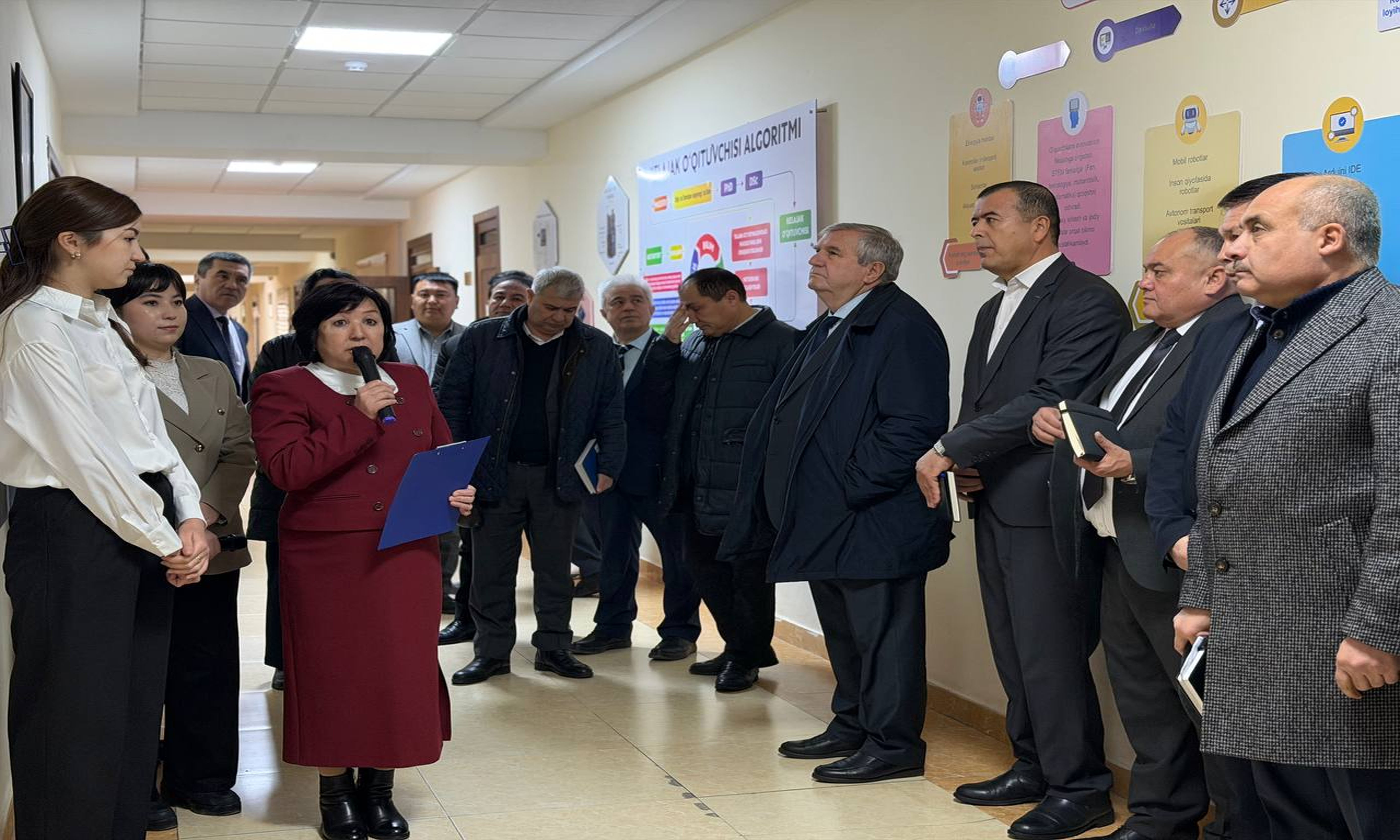
Within the framework of the “Educational Environment - Third Teacher” project organized at our university, the Department of Information Technologies and Artificial Intelligence carried out extensive practical work. Within the framework of the project, special attention was paid to organizing the educational environment in a modern, innovative and interactive form.
An exhibition and a holographic device were created at the entrance to the faculty on the theme “Physics + Mathematics + Information Technologies = Digital 3D Spatial Model - Hologram” based on the integration of disciplines. This work demonstrates the interrelationship and the practical application of digital technologies.
A demonstration tool called “Chain of Modern Literacy Competencies” was also created, reflecting the stages of development of the currently relevant field of artificial intelligence. As a logical continuation of this topic, an exhibition on the practical application of these technologies in the educational process was developed on the topic “Introducing artificial intelligence in education”.
An infographic exhibition entitled “Future Teacher Algorithm” was prepared within the framework of the “Future Teacher” project. At the same time, an exhibition dedicated to the life and scientific heritage of Al-Khwarizmi, the founder of the science of algorithms, was organized, and a video was developed based on artificial intelligence technologies, highlighting his rich scientific heritage and aimed at attracting students to science.
Taking into account that the main users of the educational environment are students, a number of visual aids were created on the specialized disciplines of the department:
An exhibition under the slogan “Robotics - Create! Program! Move!”, which contains the necessary information for studying the science of robotics;
“Modern Programming Languages” — an exhibition providing information about programming languages and basic programs popular among students;
“Computer Networks” — an exhibition providing information about network types, topology and technical devices;
“Web Programming” — an exhibition containing the necessary programs and basic concepts for becoming a web programmer.
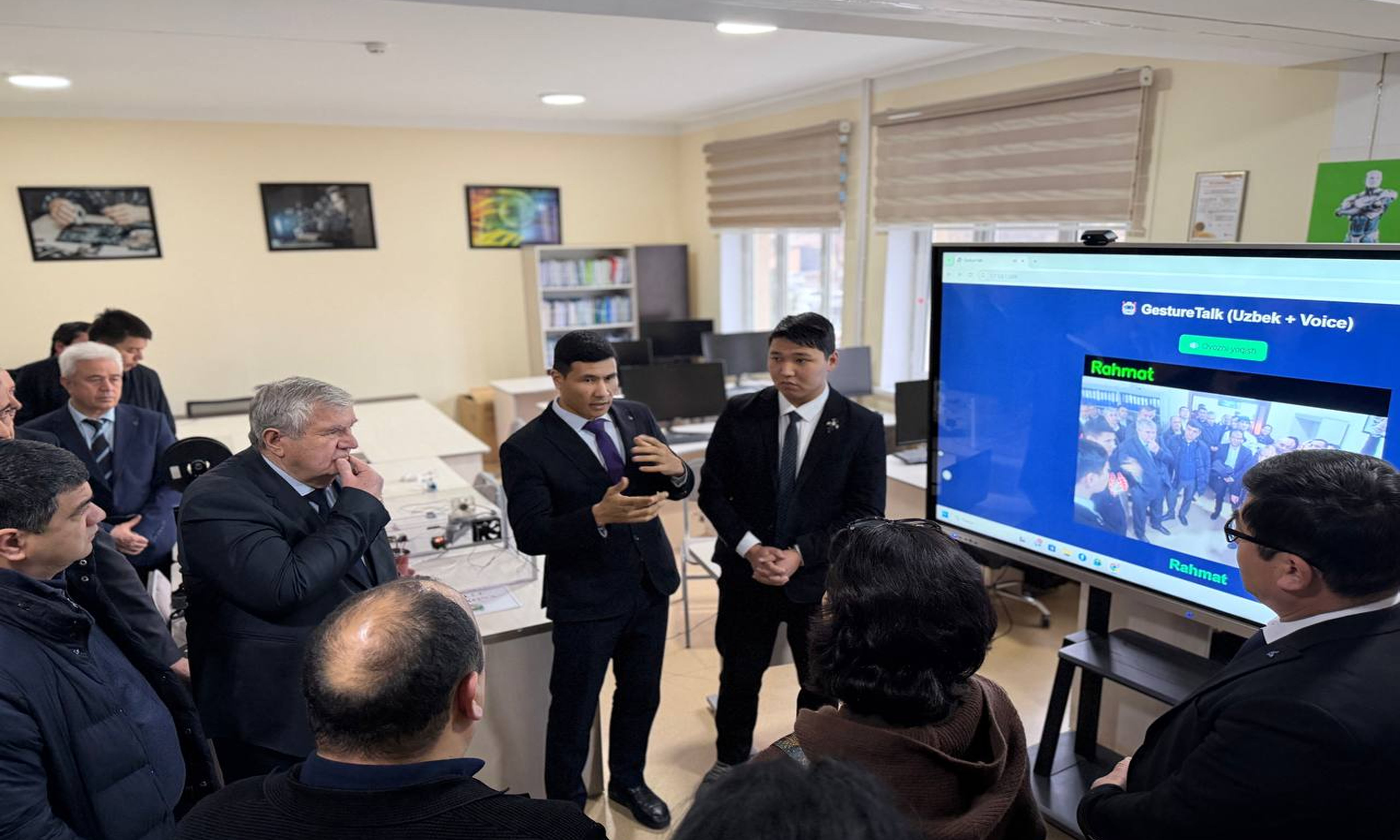
In addition, a virtual holographic teacher program and its device based on artificial intelligence were created for students. This innovative development allows for a more effective and interactive organization of the educational process.
A collection of certificates for software created by the professors and teachers of the department and a separate exhibition highlighting the activities of the department were also organized.
These works serve to enrich the educational environment, develop students' digital competencies, and establish effective education based on modern technologies.
 |
 |
International cooperation
Certain work is being carried out to further develop the international cooperation of the Department of "Information Technologies and Artificial Intelligence" and exchange experience with advanced foreign educational centers and organizations in the framework of educational, scientific and innovative research. Currently, the department has established cooperation with the following prestigious foreign higher educational institutions:
 Kazakh National Pedagogical University named after Abay |  Lublin University of Technology, located in Lublin, Republic of Poland |  South Kazakhstan State University named after Mukhtar Avezov |
International conferences and seminars
In accordance with the order of the Minister of Higher Education, Science and Innovations of the Republic of Uzbekistan No. 490 dated December 27, 2024, an international scientific and practical conference on the topic “New methods and innovations in the integration of mathematics and information technology disciplines” was held in Chirchik (Chirchik State Pedagogical University) on April 18-19, 2025.
Conference organizers
- Ministry of Higher Education, Science and Innovation
- South Kazakhstan University named after Mukhtar Auyezov
- Sultan Idris Pedagogical University
- Abay Kazakh National Pedagogical University
- Science & Innovation Journal
Chirchik State Pedagogical University
The conference will focus on the wide introduction of comprehensive and effective innovations in the integration of mathematics and information technology disciplines in the education system, improving the scientific level of teachers, improving the quality of education and educational infrastructure, existing problems and their solutions, studying international experience in this area, establishing partnerships, and the scientific basis of innovative ideas and developments of talented young people. Exchange of ideas among research experts through the application of innovative methods and technologies in the field that meet global requirements.
History of the Department
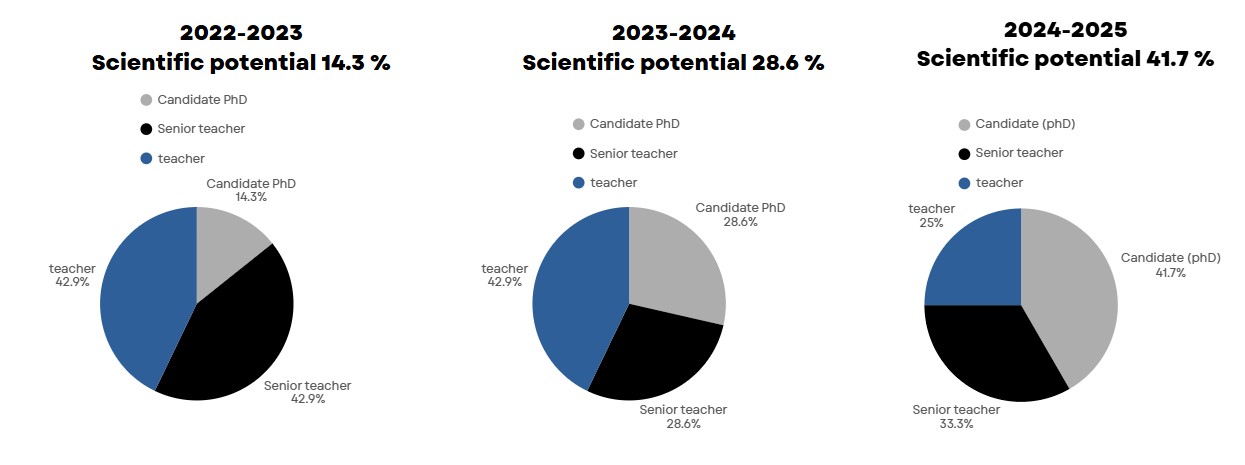
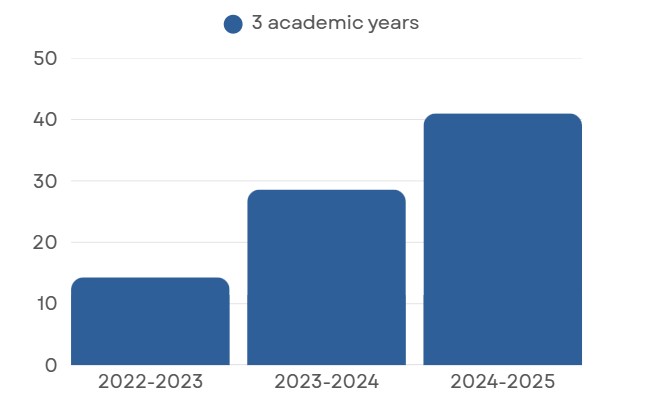
Tashkent Regional Chirchik State Pedagogical Institute (Currently Chirchik State Pedagogical University) was established in accordance with the Resolution of the President of the Republic of Uzbekistan dated July 27, 2017 No. PQ-3152 “On the Establishment of the Tashkent Regional Chirchik State Pedagogical Institute”, and began its activities in the direction of “Informatics Teaching Methods” as part of the “Exact Sciences” Department of the “Exact and Natural Sciences” Faculty of the Institute. The department was established under the name “Informatics and Information Technologies” as part of the Faculty of Mathematics and Informatics based on the resolution of the 1st meeting of the Council of the former Tashkent Regional Chirchik State Pedagogical Institute dated August 28, 2021. In 2025, the “Information Technologies and Artificial Intelligence” department was established as part of the “Informatics Teaching Methods” and “Informatics and Information Technologies”. The department mainly educates students in the following specializations: "Mathematics and Informatics", "Information Systems and Technologies", Mathematics, Applied Mathematics and Artificial Intelligence. Currently, the department employs 12.75 full-time professors and teachers. Including 5 candidates of science, 4 senior lecturers, and 3 assistants.
Dynamics of scientific potential
Goals and Objectives
The Department of "Information Technologies and Artificial Intelligence" is an important structural unit of the Faculty of Exact Sciences. The department operates in the following main areas:
Educational process:
Bachelors in Mathematics, Applied Mathematics, Information Systems and Technologies, Mathematics and Informatics, and Artificial Intelligence, as well as Masters in Information Technologies in Education, are prepared. Educational, methodological, and scientific-methodological work is carried out on the specialized disciplines taught in these educational areas.
Research activities:
The scientific research topic of the department is called “Provision of an individual educational program within the framework of an educational cluster,” and professors and teachers are actively conducting scientific work in this regard. Also, the necessary organizational, methodological, material, and technical conditions are being created to organize the scientific and creative activities of students on a systematic basis, identify talented students and involve them in scientific research, train them to carry out scientific and research work individually and collectively, and implement their scientific and creative activities.
Training of scientific and pedagogical personnel:
Training highly qualified specialists and teachers for the future generation is one of the priority tasks of the department.
Spiritual, educational, and educational work:
Spiritual and educational work is also carried out regularly so that students can develop into well-rounded individuals.
On the map
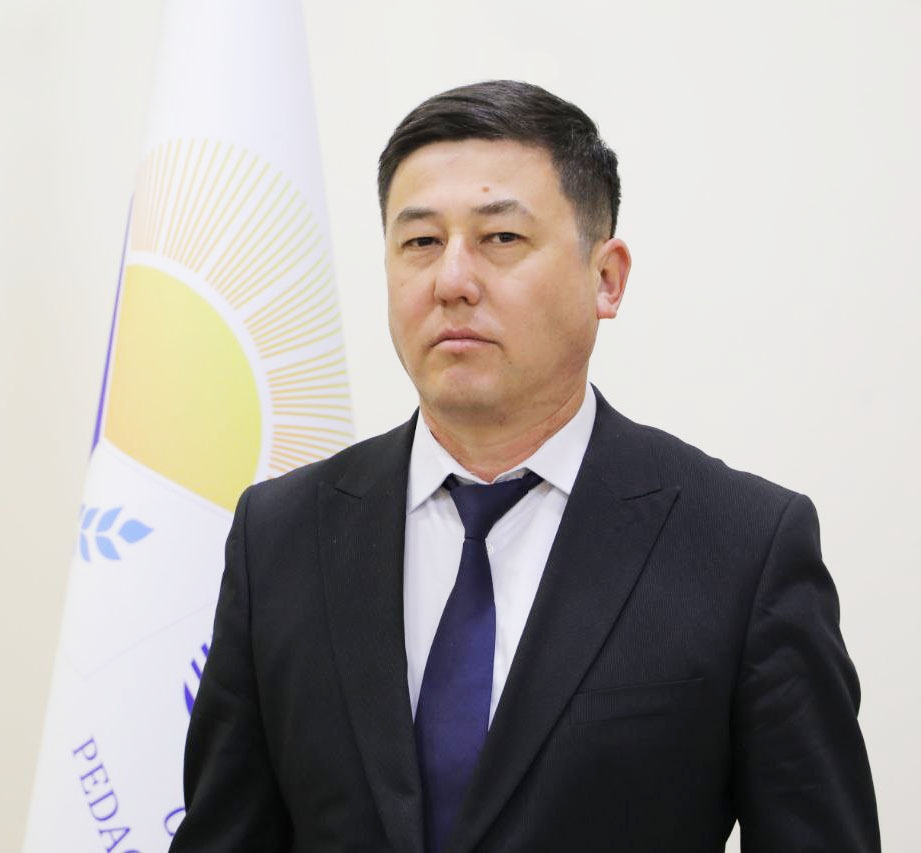
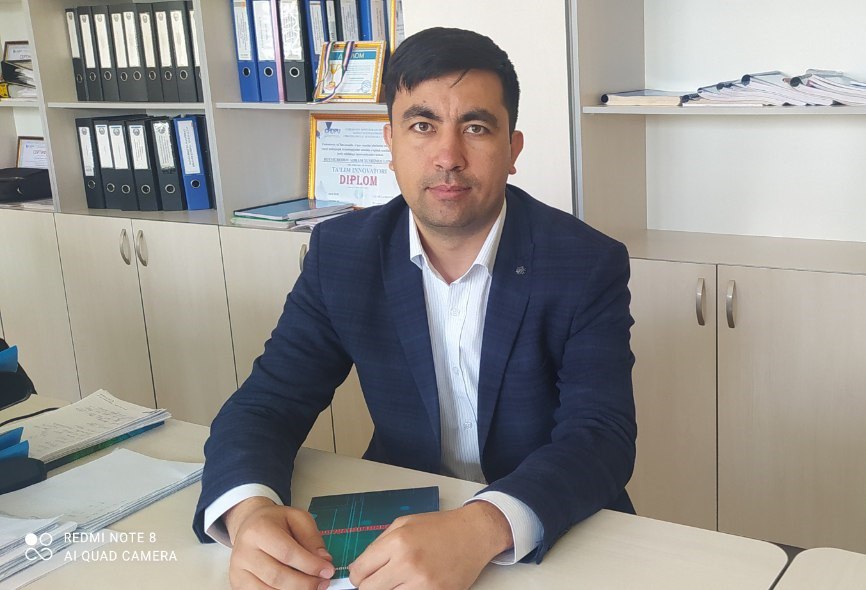
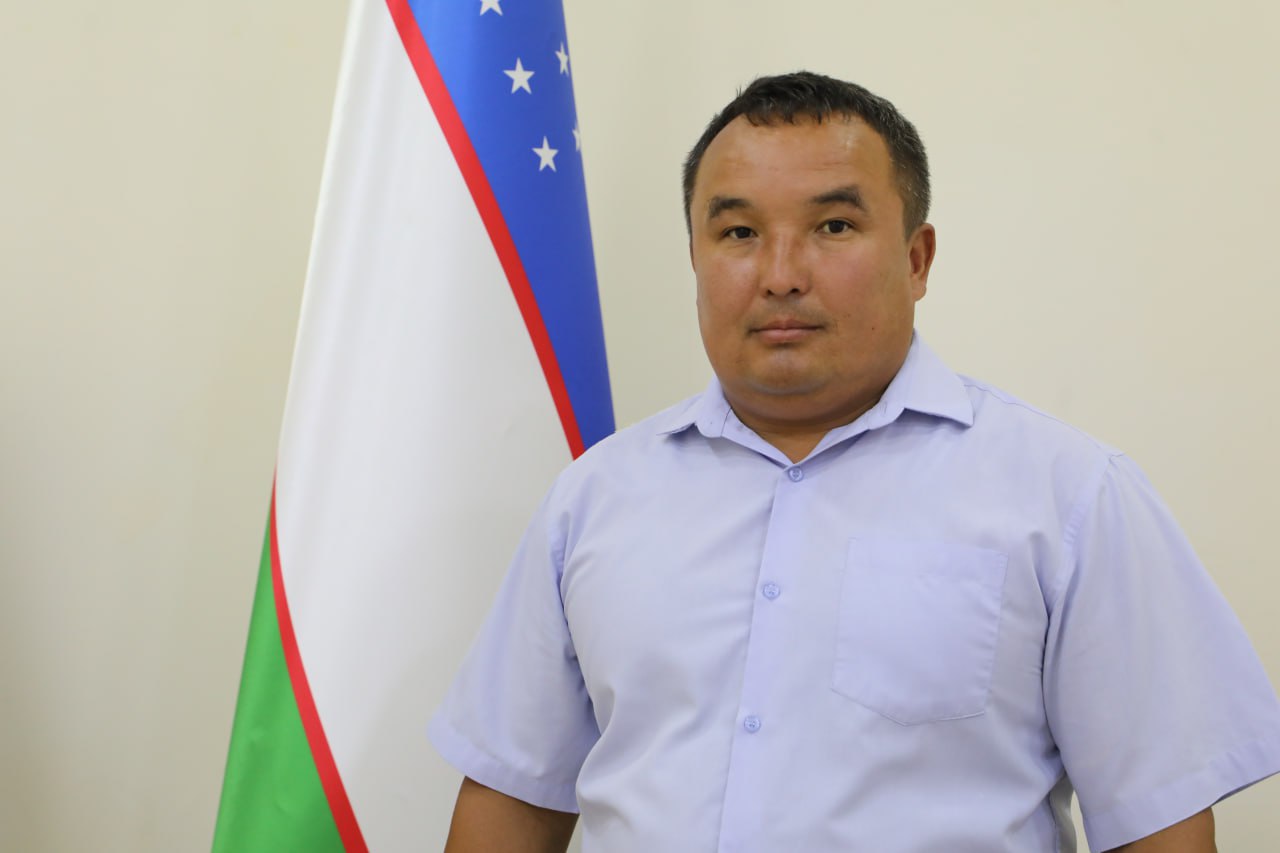
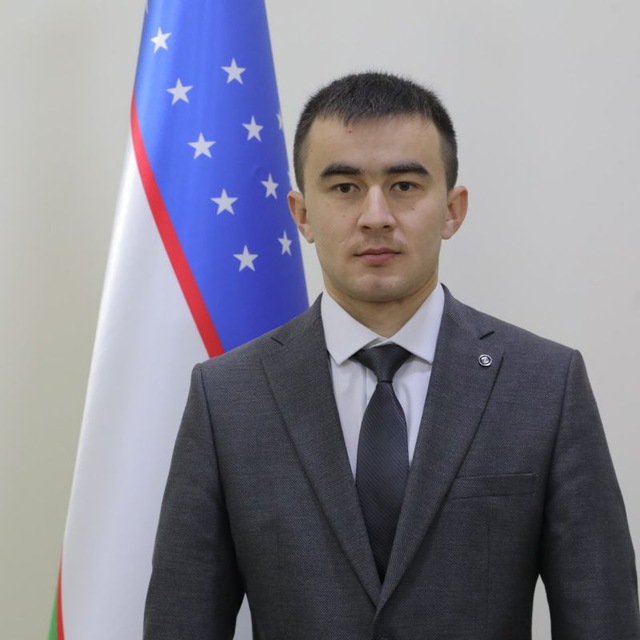
Adham Boymurodov Xshimkulovich
Head of the Department of "Information Technologies and Artificial Intelligence". Doctor of Philosophy (PhD) in Pedagogical Sciences
Doctor of Philosophy (PhD) in Pedagogical Sciences, Associate Professor








EDUCATIONAL ACTIVITIES
Information technologies And artificial intelligence department education activity modern digital pedagogical requirements suitable , innovative approaches based on education process organization to achieve concentrated .
Education process organization grow
Programming languages , information databases , computer networks , artificial intelligence , machine teaching and robotics science in accordance with lectures And practical education is being carried out .
Digital education , electronic training video lessons , online platforms And modern teaching from technology wide is used .
Education plan , scientific program ( curriculum ), practical works And independent education tasks working outside And ordinary updated is coming .
Practical skills formation
Python, C++, JavaScript, HTML/CSS, SQL, Django , FastAPI And another technologies in accordance with practical lessons organization to be
Artificial intelligence systems , computer vision , natural language again performance , neuron networks , big data, Internet of Things And cloud technologies in accordance with laboratories .
Students startup , hackathon , technology projects And innovative to the competition Preparation
Knowledge And skills grade
Current , intermediate And finale tests , quizzes , practical exercises tasks through is estimated .
Case studies , project work , code write and AI models create through competencies is estimated .
Grade criteria :
5 " excellent " - science connected given tasks in accordance with conclusion And solution acceptance to do ; creative think take ; independent under observation to conduct ; to practice with comfort take ;
essence understand ; know ; tell to give ; to imagine has to be
4 " good " - about science , to him connected concepts distinguish receive , give tasks O independent under observation to conduct ; to practice with comfort take ; essence
understand ; know ; tell to give ; to imagine has to be
3 " satisfactory " - from here tasks distinguish get , to the task connected concepts essence understand ; know ; tell to give ; to imagine has to be
2 " unsatisfactory " - about science , taking into account appointment essence misunderstanding , task speaking give O transparent imagination has without knowing , without knowing .
For scientific research directed education
Students scientific to projects attraction make : artificial intelligence , information analysis manufacturing , robotics , digital technologies safety .
Scientific clubs , seminars , master classes And scientific schools organization to be
Professors and teachers together scientific articles , patents And launch projects on Job
Exercise And outlet to your work leadership
IT companies , technology parks , incubators With in cooperation practices organization to be
Outlet skilled works And master's degree to their dissertations leadership to do, to the IT market directed topics recommendation to do
Practical to the project based on BMI and in the briefcase directed approach current to be
Education quality increase
Modern IT and AI technologies suitable education programs current to be
Teachers qualification Update : Certifications (Microsoft, Cisco, Google, Oracle) in the field of AI international courses .
Education to the process artificial intelligence based on education tools execution to be
Students With individual Job
Mentoring , independent to education leadership , project groups for compilation .
Professional orientation , portfolio formation and the IT market suitable skills give
Talented students With separately Job And their Olympiads , competitions Preparation
Scientific research directions
Department main scientific directions
Education cluster individual training within software called supply so far Greek 2 scientific research work 1 scientific paper completed work in process . Department professor teachers from the side same at the time to students by subjects independent education and abandoned lessons again submission www.mi-mt.uz platform created assignments online send and and student mobile application through acceptance to do conditions create project in progress .
Priority scientific topics
Methodology for developing meta-competence of future teachers using digital technologies
Methodology for improving the educational process in pedagogical higher educational institutions based on individual educational technologies
Methodology for developing programming competence of future computer science teachers
Methodology for improving the efficiency of the educational process in higher education institutions based on blended learning
Computer software tools and mobile applications through robotics science teaching methodology improvement
Pedagogical methods and technologies used in developing an interactive web platform for school students
Methodology for ensuring teachers' readiness to use e-learning and platforms.
Speaker under the circumstances environmental monitoring system management for mathematician model and supply
Mathematics and computer science science Individual training of teachers to give process improvement methodology
Pedagogy in university students artificial intellect to teach methodology formation
Network technologies chair of the lesson integrative meodic system improvement
Methodology for the formation of information and communication competence in the process of professional training of future physics teachers
Methodology for creating and using an information system for automatic verification of independent educational tasks
Teachers' scientific activity
No. | FISH | Scientific invoni , level | Philosophy Doctor of Science ( PhD ) or Doctor of Science ( DSc ) level topics |
Khurramov Anwar Jumanazarovich | Associate Professor | Methodology for developing meta-competence of future teachers using digital technologies | |
Rizayeva Pine tree Davlataliyevna | Associate Professor - | Methodology for improving the educational process in pedagogical higher educational institutions based on individual educational technologies | |
Kuralov Yuldash Abdullayevich | Associate Professor | Methodology for developing programming competence of future computer science teachers | |
Sultanov Ravshonbek Otonazarovich | - | Computer software tools and mobile applications through robotics science teaching methodology improvement | |
Rajabov Oybek Togaymurod son | - | Pedagogical methods and technologies used in developing an interactive web platform for school students | |
Abduraimov Juratbek Gafurovich | - | Methodology for ensuring teachers' readiness to use e-learning and platforms. | |
Ibadullayev Daniel Kuvondikovich | - | Speaker under the circumstances environmental monitoring system management for mathematician model and supply | |
Yuldashev Shokhruhbek Zokirjon son | - | Mathematics and computer science science Individual training of teachers to give process improvement methodology | |
Azimkulov Sayhun Necessary son | - | Pedagogy in university students artificial intellect to teach methodology formation | |
Ganiev Inspiration Dostnazarovich | - | Network technologies chair of the lesson integrative meodic system improvement | |
Ismailov Azamat Arslanboyevich | - | Methodology for the formation of information and communication competence in the process of professional training of future physics teachers |
Scientific publications and articles ( 2025 )
Certificates
Nishonova MA, Ibadullayev DK “ Students for independent education mobile application (frontend part ) ” // Intellectual property agency Certificate DGU 47103, 2025.
3. Tadjibayeva RM, Ibadullayev DK “ Students for independent education mobile application ( backEnd ) ” // Intellectual property agency Certificate DGU 47105, 2025
Ismailov AA Sh.M. Jurayev Electronic document almashinov process for in the images the text familiar program / Uzbekistan republic justice of the ministry certificate DGU 53370 , 2025
Orishov AN Elementary education for digital training platform // Intellectual property agency Certificate DGU No. 51466 dated 27.05.2025.
International scientific in magazines ("Web of Science", "Scopus" and other international confession done to the bases included published in magazines ) scientific articles
Boymurodov AX Education, efficiency, achievement, artificial intelligence, innovative technologies. // Modern American Journal of Linguistics, Education, and Pedagogy Volume 01, Issue 03, 2025, June, 2025. ISSN (E): 3067-7874. P. 42-48
Anvar J. Khurramov , Mavluda A. Ahmedshaeva , Fiyuza A. Mukhitdinova , Gulnora A. Khudayberdiyeva , Shahnoza S. Almosova , Makhmud M. Makhamatov , Sherzod R. Khayitov . Artificial Intelligence in Education: Analysis and Assessment of Legal Knowledge Using AI Tools. // Qubahan academic journal VOL. 5, NO. 3, August 2025.: P. 264-293
Salayev AK, Sultanov RO, Ibadullayev DK Azimkulov SN, Yu`ldoshev Sh.Z. Modern Methods of Generating Pseudo Random Numbers: Advantages and Disadvantages // 2025 IEEE 26th International conference of young professionals in electronic devices and materials (EDM).
Egashov BA The impact of integrating informatics and mathematics on students' algorithmic thinking//Modern American Journal of Engineering, Technology, and Innovation Volume 01, Issue 03, June, 2025, ISSN(E): 3067-7939, P. 203-210
Rizayeva SD Pedagogy formation of the learning process in higher educational institutions on the basis of individual educational technologies // Modern American Journal of Linguistics, Education, and Pedagogy Volume 01, Issue 07, October, 2025ISSN (E): 3067- 7939. P. 51-61
Kuralov YA Methodology for forming pedagogical competencies of future informatics teachers // Educator Insights: A Journal of Teaching Theory and Practice Volume 01, Issue 09, September 2025 brightmindpublishing.com ISSN (E): 3061-6964 Licensed under CC BY 4.0 a Creative Commons Attribution 4.0 International License.
9. Gulshad Yuldasheva , Navruzbek Ruzmetov 1 , Aziza Sharipova 2 , Abdugapour Djamirzaev 3 , Mukhabat Khalmetova 3 , and Roman Tsarev 4,5 ( B ). Comparing Traditional and Interactive E-Learning: A Nonparametric Analysis of Academic Performance. Metadata of the chapter that will be visualized in
SpringerLink. https://www.scopus.com/authid/detail.uri?authorId=59996330800&origin=recordpage
9. AJKhurramov , MAAkhmedshaeva , FAMukhitdinova , GA Khudaiberdiyeva , Sh.S.Almosova , MM Makhamatov , Sh.R.Khayitov . Artificial Intelligence in Education: Analysis and Assessment of Legal Knowledge Using AI Tools// Qubahan academic journal VOL. 5, NO. 3, August 2025: P. 264-293
10. AJKhurramov , IATashkarayev Innovative Ways to Develop Metacompetence in the Context of Digital Technologies// International Journal of Human Computing Studies Volume: 7 Issue: 3 | December 2025 P. 162-167
11. Yuldasheva G. T, Yuldasheva SR Technologies For Creating Educational Software Tools Using Author's Programs // Pedagogical Cluster- Journal of Pedagogical Developments PCJPD: Volume 3 Issue 03, March 2025, online: ISSN 2956-896X. Website: https://euroasianjournals.org/index.php/pc/index.49-53
12. Ismailov AA Comparative analysis of informatics teaching methodologies in the United States and Germany// American journal of education and learning ISSN: 2996-5128 (online) researchbib (if) = 9.918 impact factor volume-3, issue-6 2025 P. 717-723.
13. Urishov AN Improving the software and methodological support for preparing future informatics teachers for independent research activities // Modern American Journal of Engineering, Technology, and Innovation ISSN( E): 3067-7939 Volume 01, Issue 03, June, 2025. P-187-194
14. Shahrukhbek Yuldoshev EFFECTIVE WAYS TO USE INFORMATION TECHNOLOGY IN INCLUSIVE EDUCATION // World Bulletin of Education and Learning (WBEL) ISSN (E): 3072-175X Volume 01, Issue 01, October 2025. 77-83 pp.
Republic in magazines scientific list of articles
Boymurodov AX Turki countries education cluster // “ Pedagogical " skill " scientific-theoretical and methodical magazine , Bukhara-2025. No. 9. p. 177-179.
Ergashev BA RTMDET: brain tumors in diagnostics artificial of intellect new Stage // Teacher and continuously education' . Scientific-methodical journal, Nökis . ISSN 2181-7138, 2025. Issue 2/4, pp. 270-281.
Kuralov YA Digital technologies using programming education efficiency increase methodology // Uzbekistan national university News , 2025, [1/4] ISSN 2181-7324, p. 118-121.
Kuralov YA Algorithmic thinking in formation digital training resources didactic importance // Teacher and continuously educational , scientific - methodical journal , 2025 3/6 issue, pp. 87-91.
Kuralov YA Digital education platforms through programming skills formation methodology // Profession education , scientific-methodical , practical , educational magazine, 2025, issue 6, pp. 13-16.
6) Yuldasheva GT, Ahmadova. The importance of using artificial intelligence technologies in improving the qualifications and developing the competence of general science teachers // Educator FA Insights: A Journal of Teaching Theory and Practice. Volume 01, Issue 10, October 2025 ISSN (E): 3061-6964 . 89-96 p.
7) Ibadullayev DK Information and Education environment – educators informational and methodological support pedagogical condition as // Profession education , scientific-methodical , practical , educational magazine 2025, issue 10, p. 220-226.
8) Rizayeva SD Digital transformation in the process students academy organization of reaching pedagogical and scientific basics // Profession education , scientific-methodical , practical , educational magazine , 2025, issue 10, pp. 167-173 .
9. Musurmanov U.S. Artificial of intellect in education position // Scientific - methodical magazine 2025, issue ½, ISSN 2181-7138, p. 290-292.
10. Ismailov A. A. Big data oh my in in systems mass nayma : efficiency and masstabiruemost // Science abstracts , scientific-theoretical , methodological magazine . 2025. Issue 4. p. 169.
11. Orishov AN Future computer science their teachers independent search to the activity preparation according to software-methodical supply improvement // “ In education creative approach current "issues" Republic scientific and practical conference April 24-26, 2025. P.436-438
12. Rizayeva SD Pedagogy supreme education in institutions training Individual education process technologies based on organization to grow model / / Inter Education & Global Study Journal, DOI: 10.5281/ zenodo , Volume 3, Issue 10(1), Pages 17-33, ISSN: 2992-9024, October 2025
13. Yuldashev Sh.Z. Digital technologies by means of students technician creativity develop technology // Profession education , scientific-methodical , practical , educational magazine 2025, issue 10, pp. 36-41.
Study manuals
Boymurodov AX Artificial intellect Fundamentals of the CHDPU о ' educational and methodological Council meeting No. 10, March 28 , 2025 statement with approved . – T.: “City of books” publishing house . 2024.
Kuralov YA in Tourism digital technologies CHDPU o ' educational and methodological Council meeting No. 10, March 28 , 2025 statement with approved . – T.: “City of books” publishing house . 2025.
Orishov AN in Tourism digital technologies CHDPU o ' educational and methodological Council meeting No. 10, March 28 , 2025 statement with approved . – T.: “City of books” publishing house . 2025.
Monograph
Rizayeva SD Pedagogy supreme education in institutions training Individual education process technologies based on improvement methodology . -Tashkent.: “ Zebo Print”, 2025. P. 148.
Scientific projects
Professors and teachers of the department on the side " Future " VR technology for teachers through to prepare develop technology " project in the heat work take going
Purpose This project “ Future VR technology for teachers through to prepare develop technology " and its main purpose graduate students pedagogical qualification and virtual simulation of skills using from improvement consists of . The current on the day new pedagogue of personnel own disadvantages ignorance , lesson from methods right and effective use not being able to and different pedagogical in situations himself losing to put cases there is problem as This is under consideration . problem eliminate to grow for the purpose project VR technology based on various real-life situations simulation to do , teacher activity analysis to do and finally his/her achievement and disadvantages about report formation opportunity gives . The project practical importance — new to educators spiritual preparation , real experience and metacompetence increase opportunity As a result , modern technologies knowledgeable , innovative thinker , professional in terms of mature teachers is being prepared
Expected results and their importance ( expected results and their scientific and social importance ownership , planned of the results world on a scale research to the results compatibility , in the project planned of the results economic and social in the fields to practice implementation to grow options ):
Innovative developments
Department by created teachers for oh my methodical Tech HUB assistant app TeachAi HUB is platform pedagogue personnel for special created program is considered . “ Information technologies and artificial " Intellect " department teachers by created by TeachAI HUB platform department opportunities of the following consists of ::
International cooperation
Certain work is being carried out to further develop the international cooperation of the Department of "Information Technologies and Artificial Intelligence" and exchange experience with advanced foreign educational centers and organizations in the framework of educational, scientific, and innovative research. Currently, the department has established cooperation with the following prestigious foreign higher educational institutions:
Kazakh National Pedagogical University named after Abay | Lublin University of Technology, located in Lublin, Republic of Poland | South Kazakhstan State University named after Mukhtar Avezov |
International conferences and seminars
In accordance with the order of the Minister of Higher Education, Science and Innovations of the Republic of Uzbekistan No. 490 dated December 27, 2024, an international scientific and practical conference on the topic “New methods and innovations in the integration of mathematics and information technology disciplines” was held in Chirchik (Chirchik State Pedagogical University) on April 18-19, 2025.
Conference organizers
- Ministry of Higher Education, Science and Innovation
- South Kazakhstan University named after Mukhtar Auyezov
- Sultan Idris Pedagogical University
- Abay Kazakh National Pedagogical University
- Science & Innovation Journal
Chirchik State Pedagogical University
The conference will focus on the wide introduction of comprehensive and effective innovations in the integration of mathematics and information technology disciplines in the education system, improving the scientific level of teachers, improving the quality of education and educational infrastructure, existing problems and their solutions, studying international experience in this area, establishing partnerships, and the scientific basis of innovative ideas and developments of talented young people. Exchange of ideas among research experts through the application of innovative methods and technologies in the field that meet global requirements.
Information Systems and Technologies
60610100-Information Systems and Technologies – Bachelor's Degree
Academic degree - BACHELOR
Duration of study - 4 years
Type of education - credit-module
Form of education: full-time and evening
Sciences
Compulsory subjects
DAS1110 | Programming 1 |
MAB1306 | Database |
MTA1204 | Data Structures and Algorithms |
KOT1306 | Computer networks |
KIA1406 | Cybersecurity Basics |
SIA1406 | Fundamentals of Artificial Intelligence |
ATM1506 | Information system development methodologies |
BT1506 | Cloud technologies |
VT1506 | Web systems |
KHM1706 | Big Data Management |
Elective subjects
Subject 1 | Operating systems | Subject 5 | Mobile app development |
Windows server administration | Intelligent data analysis | ||
System programming | Network programming | ||
Competitive science 2 | Web programming | Subject 6 | Web design |
Real-time systems | Multimedia design | ||
Content management systems (CMS) | Building and Construction Design | ||
Subject 3 | Computer graphics | Subject 7 | Designing algorithms |
Multimedia database | Expert systems | ||
Flash technologies | Algorithm theory | ||
Subject 4 | Computer architecture | Subject 8 | Robotics and intelligent systems |
Virtual reality | Computer organization | ||
Practical software packages | Information technology in technical systems |
Subject 9 | Network security | Subject 13 | IoT technologies |
Geoinformation technologies | Electronic payment systems | ||
Information security | Data transfer and communication protocols | ||
Subject 10 | Creating computer games | Subject 14 | 3D technology |
Programming computer vision with Raspberry Pi | Technology management | ||
Adaptive e-learning platforms | Computer animation | ||
Subject 11 | Conducting business in the state language |
|
|
Programming computer vision with Raspberry Pi |
| ||
Computational linguistics |
| ||
Subject 12 | Information Systems Design Management (ERP and CRM System) |
|
|
Problem analysis and solution |
| ||
Image processing technologies |
|
Science programs
Information System Development Methodology.pdf
- Visualization of Information Systems Data.pdf
- Cloud technologies.pdf
- Programming 2.pdf
- Programming 1.pdf
- Big Data Management.pdf
- Cybersecurity Fundamentals.pdf
- Computer Networks.pdf
- Database.pdf
- Data Structures and Algorithms.pdf
- Fundamentals of Artificial Intelligence.pdf
- Web systems.pdf
60610500 - Artificial Intelligence
60610500 - Artificial intelligence - bachelor's degree
Academic degree - BACHELOR
Duration of study - 4 years
Type of education - credit-module
Form of education: full-time
Sciences
DAS1110 | Programming 1.2 |
MAB1306 | Database |
KIA1406 | Cybersecurity Basics |
MTA1204 | Data Structures and Algorithms |
EVS1306 | Electronics and Circuits 1 |
KOT1306 | Computer networks |
SIA1406 | Fundamentals of Artificial Intelligence |
EVS1406 | Probability and statistics |
INL1704 | Individual project |
KOK1506 | Computer vision |
NTC1606 | Neural Networks and Deep Learning |
ROB1506 | Robotics |
MOK1506 | Introduction to Machine Learning |
TTQ1704 | Natural Language Processing |
Resources
Information technology in education
Master's degree in Information Technology in Education
Program code: 70610105
Degree awarded: Master's degree
Forms of education: full-time
Program name: Information Technology in Education
Program duration: 2 years
In education, a student majoring in information technology must accumulate 30 credits per semester and 60 credits per academic year. The study period is 2 years, and the student must complete 120 credits by the end of the program.
The amount of one ECTS credit in hours for a master's degree is 1 credit = 30 academic hours, and the student's annual study load is 60 credits = 1800 academic hours. Of these, 50% are divided into classroom hours and 50% are independent study hours. The amount of credits that a student must acquire during the semester includes compulsory and elective subjects specified in the subject catalog .
70610105 – Represents a set of requirements for all higher education institutions that train masters in the master's degree specialty of Information Technologies in Education. A higher education institution is considered to have the right to implement the main curriculum and subject programs when it has the authority to train personnel in this master's degree specialty.
have the right to engage in scientific and pedagogical research at sectoral research institutes of the Ministry of Preschool and School Education and the Ministry of Higher Education, Science and Innovation of the Republic of Uzbekistan or as independent researchers .
Areas of professional activity:
It covers a range of professional areas related to teaching subjects in the field of information technologies in higher education, advanced training and retraining, general secondary education, and vocational education institutions, conducting research work in the Academy of Sciences of the Republic of Uzbekistan and sectoral research institutes (RIIs), research institutions (RIs) and organizations, centers, and scientific and production associations in the fields of information technologies and pedagogy in education, and solving complex problems in the field of pedagogical and information technologies.
Types of professional activities:
- scientific research and pedagogical activities;
- exploitation activities;
- organizational and managerial activities;
- experimental research activities;
- information and analytical activities;
- production and management activities.
Requirements for professional competencies
- Possess a system of knowledge about scientific and scientific-technical worldviews, knowledge of the basics of general methodological sciences, current issues of state policy; have the ability to independently analyze social problems and processes;
- be able to independently acquire and improve new knowledge and organize their work on a scientific basis;
- understand and analyze problems of scientific, technical, social, and personal importance, relying on their individual knowledge;
- be able to use regulatory legal documents in their activities;
- have a culture of thinking, a certain way of thinking, and the ability to clearly express oneself verbally and in writing;
- be able to creatively critically review and analyze the acquired knowledge, use it in scientific and scientific-technical creative activities, and make informed independent decisions;
- the formation of social responsibility aimed at realizing the results of scientific and scientific-technical creative activities;
- be able to use the basic laws of the sciences they have mastered in their professional activities, classify methods, and use methodological principles in their scientific and scientific-technical creative activities;
- mastery of one of the foreign languages as a means of scientific communication and exchange of professional skills;
- master the methods of collecting, storing, processing and using information;
- be able to make informed independent decisions in their professional activities;
- have the ability to differentiate between information, knowledge, and data, and be able to use information technologies;
Requirements for internships
Scientific practice is aimed at strengthening and developing theoretical knowledge in general and specialized disciplines, as well as combining it with scientific research processes, and forming relevant practical skills, competencies, and qualifications. Scientific practice is conducted in the specialty.
Science code | Science qualification code | Names of academic subjects, blocks and types of activities | Clock | Credit | Semester |
1 |
| Compulsory subjects | 1200 | 40 | 1-3 |
1.01 | ITM1104 | Scientific research methodology | 120 | 4 | 1 |
1.02 | AIA1104 | Searching and extracting information | 120 | 4 | 1 |
1.03 | ILB1204 | Innovation and project management | 120 | 4 | 2 |
1.04 | ALT1204 | Design and analysis of algorithms | 120 | 4 | 2 |
1.05 | MFO1304 | Special subject teaching methodology | 120 | 4 | 3 |
1.06 | NEP1206 | Neuropedagogy | 180 | 6 | 2 |
1.07 | RTP1306 | Digital education and pedagogical competence | 180 | 6 | 3 |
1.08 | IPI1108 | Scientific pedagogical work | 240 | 8 | 1,2,3 |
2 .00 |
| Elective subjects | 480 | 16 | 1.3 |
|
| Qualification: Pedagogist-researcher | |||
| ILA1412 | Scientific practice | 360 | 12 | 4 |
| CIS1152 | Preparing a master's thesis | 1560 | 52 | 1-4 |
|
| Total: | 3600 | 120 |
Throughout the program, students will have the opportunity to work with modern, digital communication and educational environments, explore interactive methods, and engage in recommended or externally selected advanced subjects as electives.
One of these disciplines is the science of Artificial Intelligence Systems. In today's digital era, artificial intelligence (AI) technologies are deeply penetrating all industries. Therefore, the subject of "Artificial Intelligence Systems" occupies an important place in the higher education system. This subject forms not only theoretical knowledge, but also practical skills in students. As a result, in the future they will be ready to create and use modern intellectual systems in various fields .
Within the framework of the program, students will be provided with theoretical knowledge in the areas of intelligent agents and decision-making mechanisms, knowledge modeling and expert systems, Machine Learning algorithms. Artificial neural networks and deep learning, Natural Language Processing. They will also be provided with practical technologies such as creating AI projects in Python and other programming languages, working with libraries such as TensorFlow, PyTorch, Scikit-learn, Computer Vision and voice recognition systems, developing Chatbots and smart assistants.
After mastering this subject, students can apply their knowledge to create intelligent learning systems and develop personalized learning programs.
In the subject of distance learning technologies, students study the history and stages of development of distance learning, types of online learning systems and their advantages, digital learning platforms (Moodle, Google Classroom, EdX, Coursera, etc.), and the theoretical foundations of methods for integrating e-learning with traditional education.
skills that students will acquire will include:
- design and create distance learning courses;
- development of video lessons, electronic manuals, testing systems;
- organizing and managing virtual classrooms;
- remote monitoring and assessment of students;
- teaching using interactive programs (Zoom, MS Teams, Mentimeter, Kahoot).
Within the scope of the subject "Modern Programming Languages", students:
As a theoretical part :
- Development trends of programming languages (from C to Python, Java, JavaScript, C#, Go, Rust, Swift, etc. ).
- imperative, object-oriented , and functional programming paradigms.
- of syntax and semantics, comparison of syntax of different languages.
- Cross-platform capabilities (mobile, web, desktop, cloud).
- Which languages are preferable when working with artificial intelligence, databases, IoT, and Big Data.
Practical part:
- Python → artificial intelligence, data science, automation.
- Java / Kotlin → Android programming, large enterprise systems.
- JavaScript / TypeScript → web programming (frontend + backend: Node.js).
- C# → game development (Unity), business applications.
- Go, Rust → high-performance systems, server programming.
- Swift → iOS programming.
- Git and version control → team programming culture.
The "Modern Programming Languages" course prepares students not only to write code, but also to create practical solutions on various platforms, develop innovative technologies, and find their place in the global IT market.
- Design and Analysis of Algorithms.pdf
- Information Search and Extraction.pdf
- Innovation and Project Management.pdf
- Special Subject Teaching Methodology.pdf
- Digital education and pedagogical competence.pdf
Doctoral programs (PhD, DSc )
Ibadullayev Daniyor Kuvandikovich
The teacher of the department , D. Ibodullayev, is conducting scientific work on the topic “Improving the training of international teachers through VR technology” in the specialty 13.00.02- Theory and methodology of education and upbringing ( by field )
Recommended literature for the Information Systems and Technologies major
Recommended English-Language Literature
The following English-language textbooks and reference books are recommended for students of the Information Systems and Technologies specialty. These resources cover fundamental concepts, business applications, and advanced topics in information systems.
Core Textbooks
- Foundations of Information Systems – OpenStax (Free)
https://openstax.org/details/books/foundations-information-systems - Information Systems for Business and Beyond – Open Textbook Library (Free)
https://open.umn.edu/opentextbooks/textbooks/information-systems-for-business-and-beyond - Information Systems: A Manager’s Guide to Harnessing Technology
https://open.umn.edu/opentextbooks/textbooks/information-systems-a-manager-s-guide-to-harnessing-technology - Managing and Using Information Systems: A Strategic Approach
https://www.wiley.com - Information Systems: What Every Business Student Needs to Know
https://www.routledge.com
Supporting and Reference Literature
- Code: The Hidden Language of Computer Hardware and Software – Charles Petzold
https://www.microsoftpressstore.com - The Secret Guide to Computers – Russ Walter
https://en.wikipedia.org/wiki/The_Secret_Guide_to_Computers - Computer: A History of the Information Machine – Martin Campbell-Kelly, William Aspray
https://www.routledge.com
Advanced and Specialized Topics
- Business-Driven Information Systems
https://guides.library.ubc.ca/mis/books - Information Systems Project Management – David Olson
https://guides.library.ubc.ca/mis/books - Interconnecting Smart Objects with IP – Jean-Philippe Vasseur, Adam Dunkels
https://www.oreilly.com

- 13 Mar, 2026
- Announcements
TOKAI UNIVERSITY DELEGATSIYASINING CHIRCHIQ DAVLAT PEDAGOGIK...
Chirchiq davlat pedagogika universitetida Tokai universiteti (Yaponiya) muhandislik maktabi vakillar...
Read More
- 15 Mar, 2026
- Announcements
“Informatika va axborot texnologiyalari” fanidan Respublika...
“Informatika va axborot texnologiyalari” fanidan Respublika fan olimpiadasini o‘tkazish
Read More
- 08 Apr, 2026
- Announcements
“KARYERA KUNI”: BITIRUVCHILAR UCHUN REAL IMKONIYATLAR MAYDON...
2026-yil 9-aprel kuni Chirchiq davlat pedagogika universitetida an’anaga aylangan “Payshanba — yoshl...
Read More