Department of methods of teaching russian language and literature in groups with other languages
The Department of Russian Linguistics is one of the leading divisions of our university, specializing in the training of highly qualified specialists in the field of Russian philology.
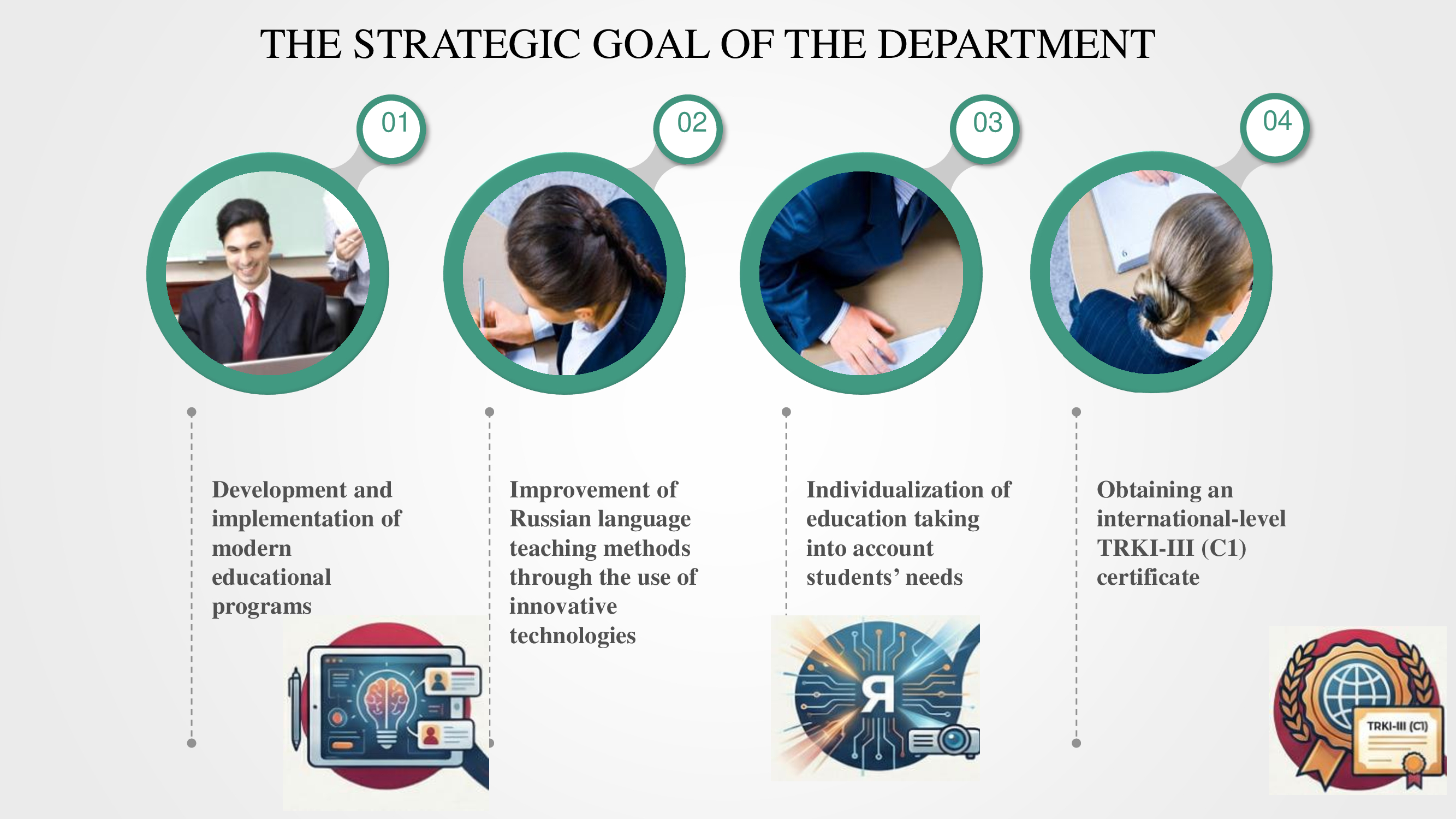
The main mission of the department is the in-depth study of the structure, history, and current state of the Russian language, as well as the preparation of students for teaching and research activities.
The Department of Russian Linguistics is an educational and scientific unit that provides fundamental and applied training of specialists in the Russian language, its structure, functioning, and contemporary development. The department’s educational activities aim to develop systematic linguistic knowledge, analytical skills for linguistic units at different levels of the language system and various types of texts, as well as professional communicative competence.
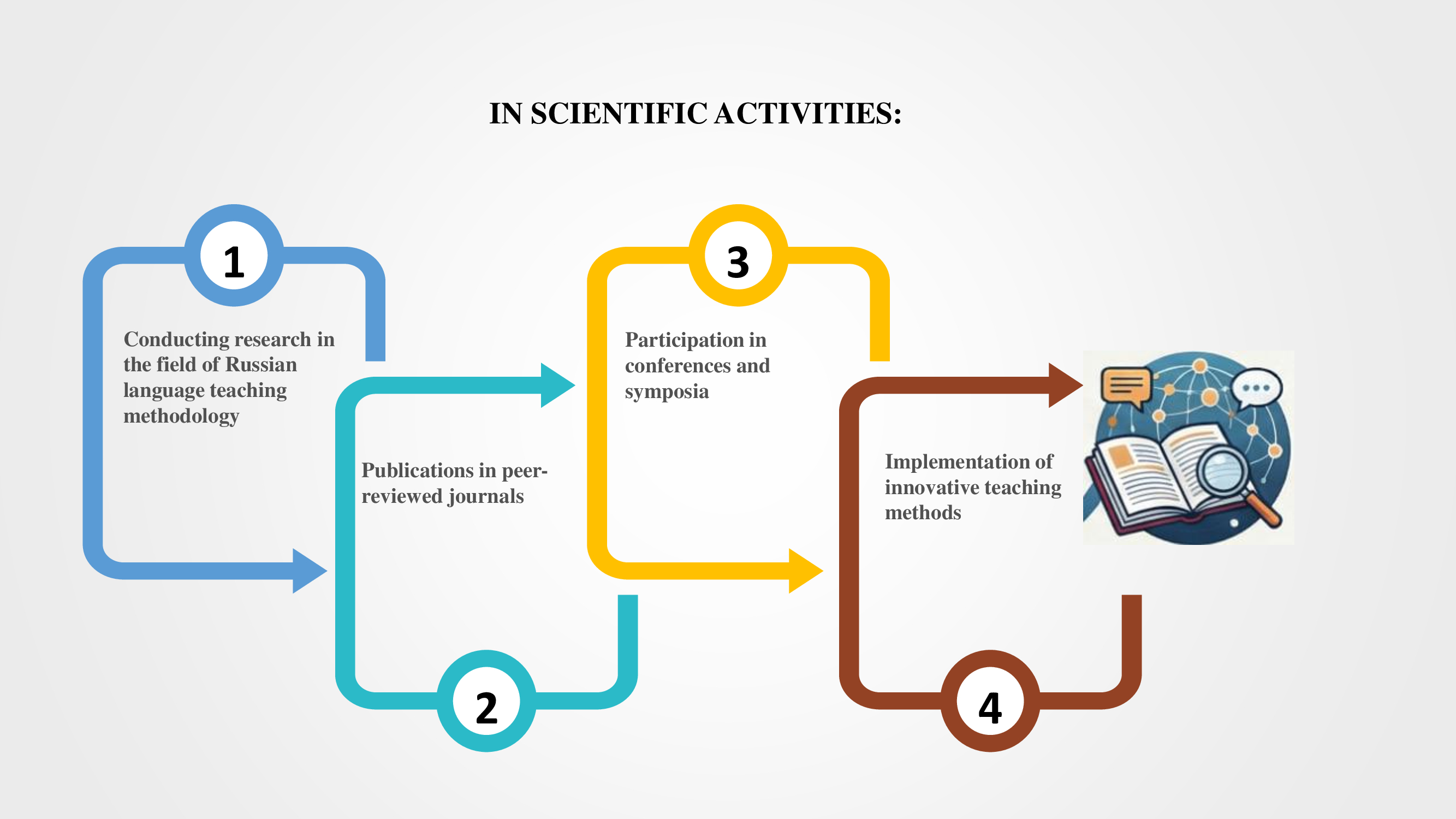
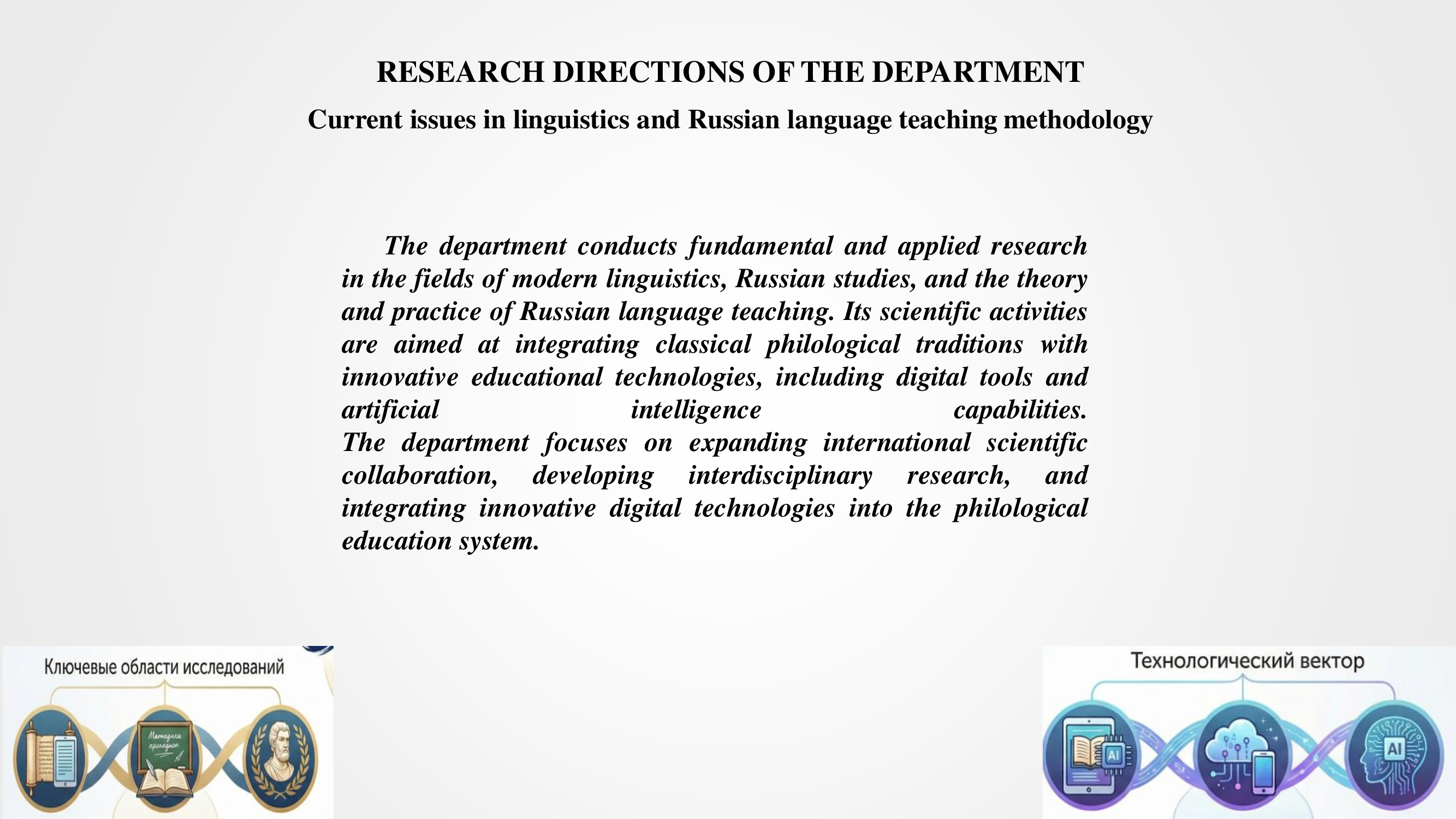
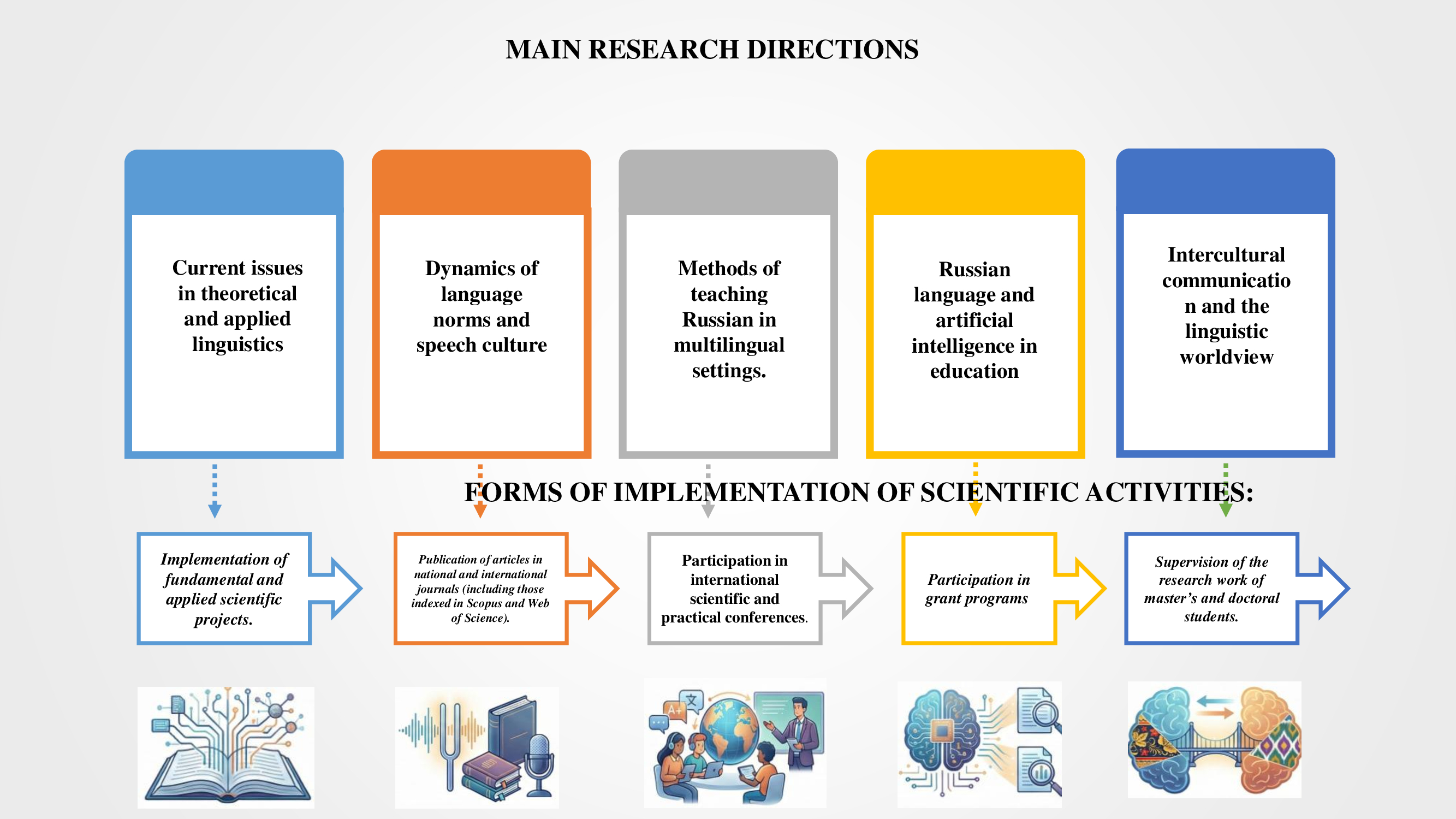
The main directions of the department’s scientific and pedagogical work cover modern Russian literary language (phonetics and phonology, lexicology, morphemics and word formation, morphology and syntax), stylistics and speech culture, sociolinguistics, and Russian language teaching methodology. Special attention is given to the study of Russian language functioning in multilingual and intercultural contexts, the dynamics of language norms, and speech processes in modern society. Training of future Russian language teachers is focused on modern educational approaches and teaching technologies, equipping students with the skills to develop digital and interactive didactic resources and apply them in teaching practice.
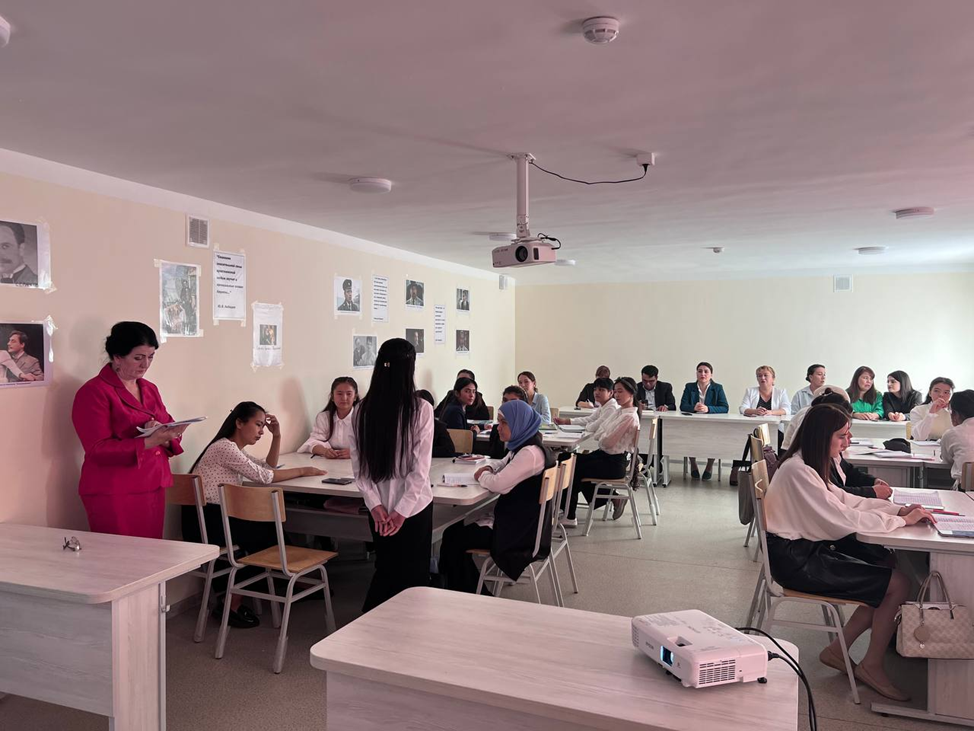
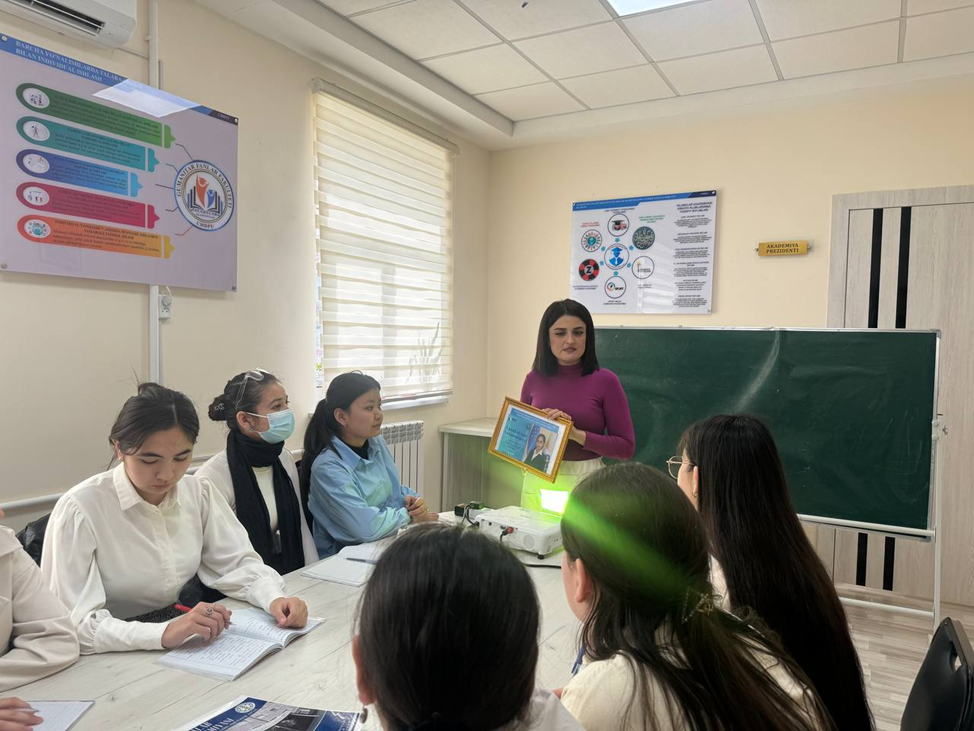
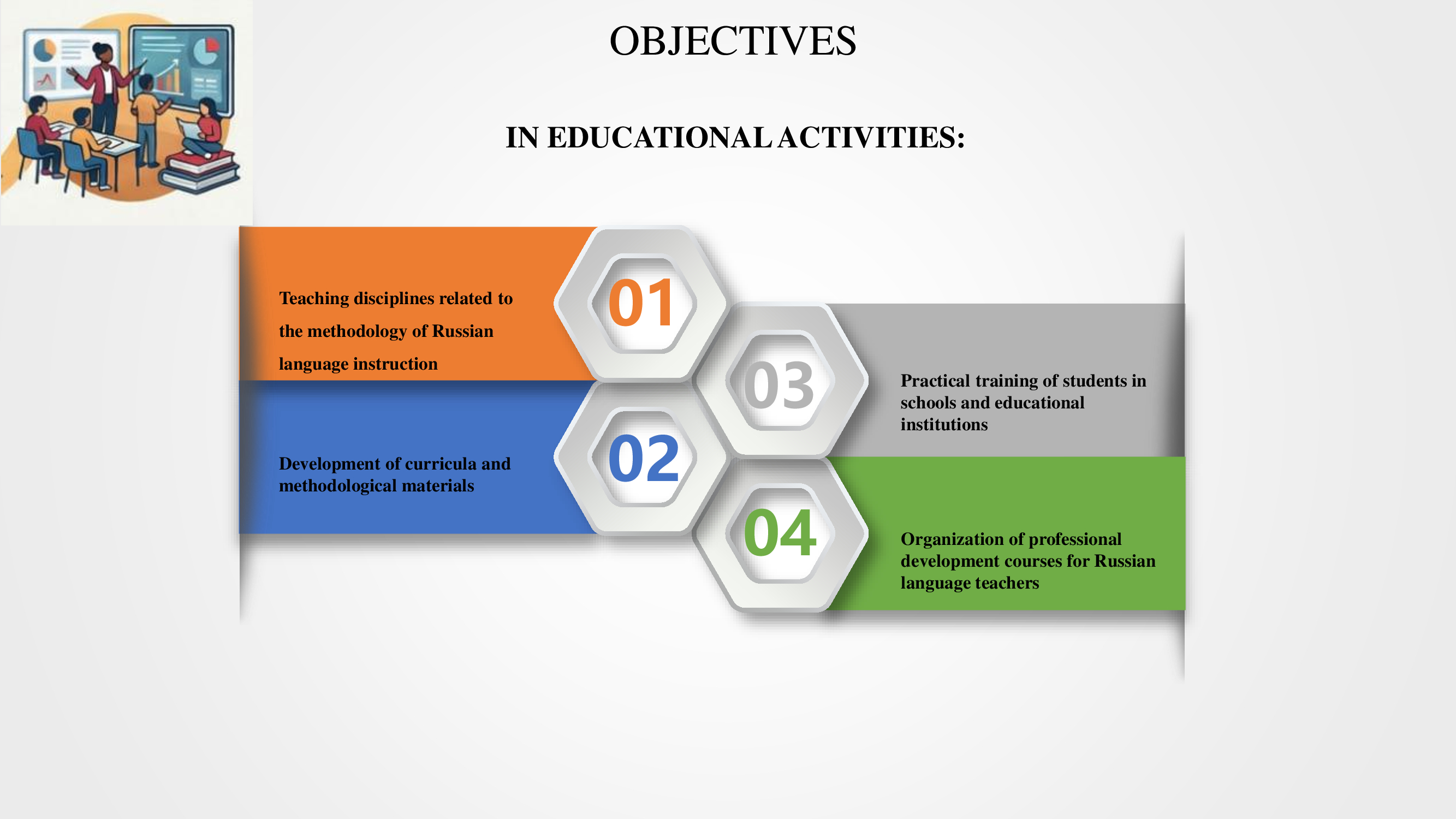
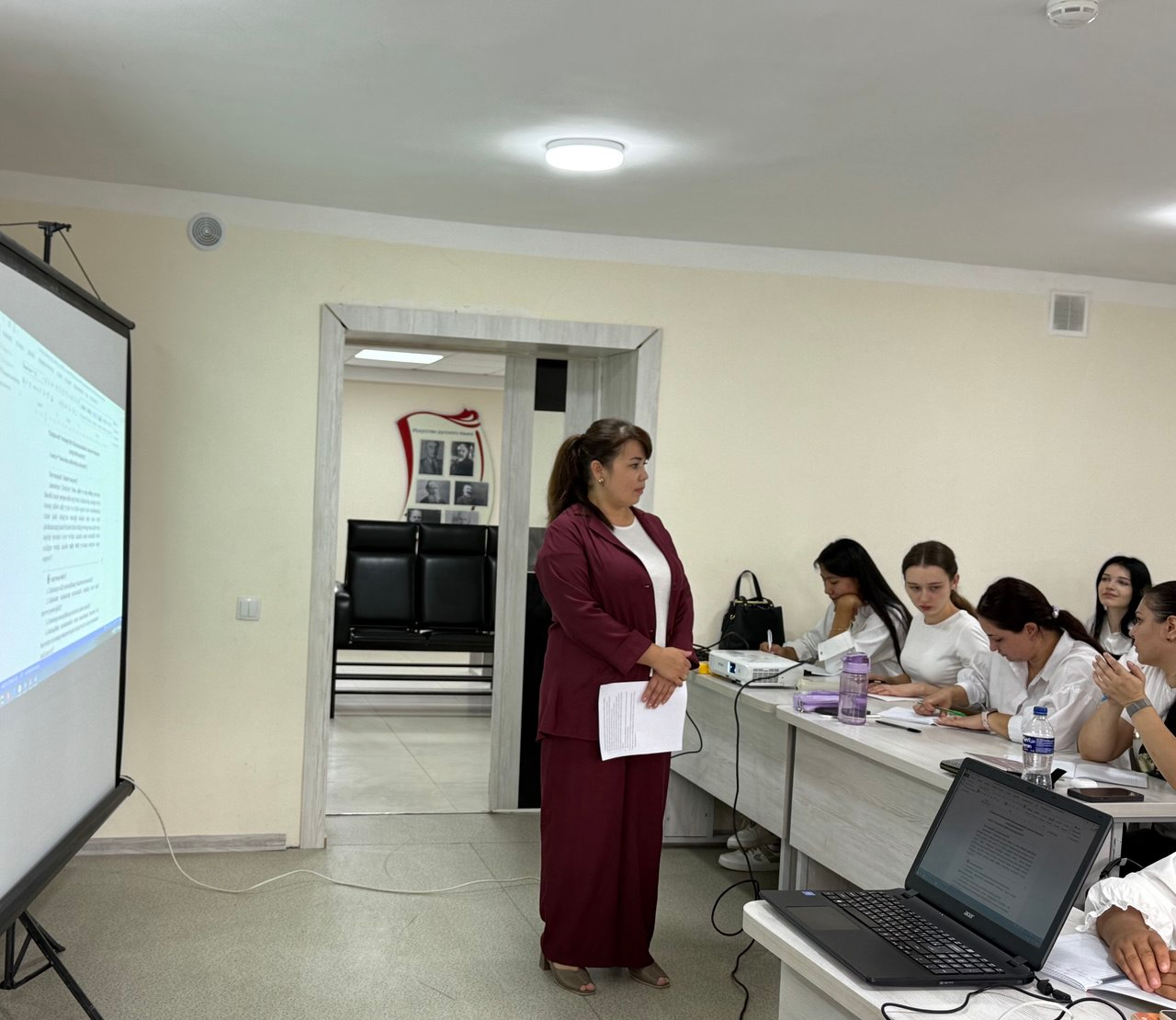
The department conducts courses in core subjects of Russian studies and language teaching methodology, and supervises students’ research work. Scientific seminars, student research clubs, master classes, and round tables are organized at the department. The faculty integrates research activities with modern educational practice, ensuring a high level of professional preparation of graduates.
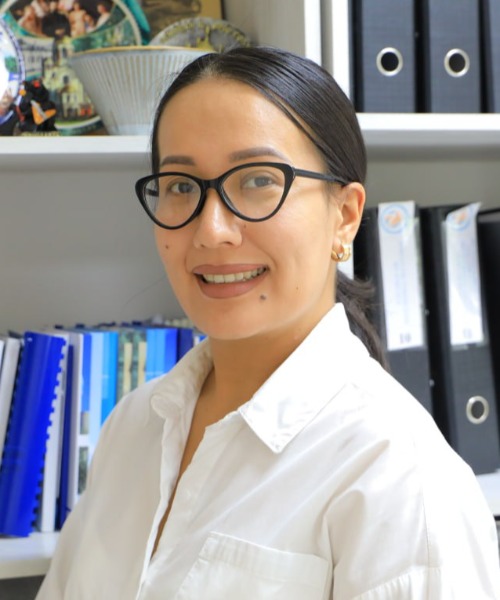
Khamidullaeva Gaukhar
Acting Head of the Department
Doctor of Philosophy (PhD) in Philological Sciences



- Phone: +998998498594
- Email xamidullayeva@cspu.uz




Gulnora Ziyadullaevna Narkuzieva
Senior Teacher
- Email narkuziyeva@cspu.uz
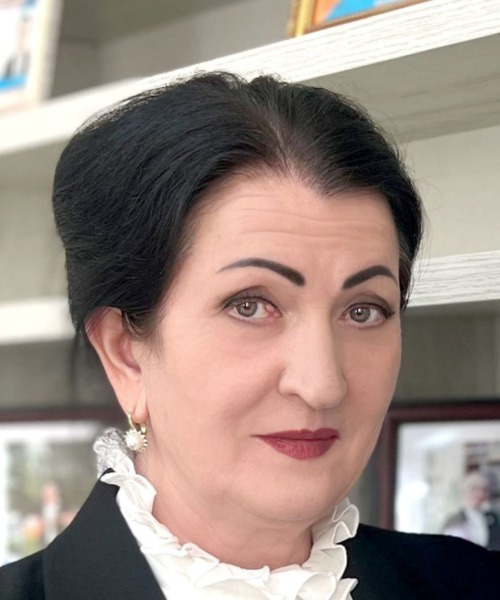
Shagiyeva Nargis Fagimovna
Senior Teacher
- Phone: +998901383988
- Email shagiyeva@cspu.uz

Shukurova Madina Abduraimovna
Lecturer
- Email shukurova@cspu.uz

Xalikova Elyanora Sergeyevna
Docent of the Department
Doctor of Philosophy in Philological Sciences (PhD)

- Phone: +998903530929
- Email e.xalikova@cspu.uz
Yunusova Malokhat Turavaevna
Lecturer at the Department of Russian Linguistics
- Phone: +998994074943
- Email m.yunusova@cspu.uz
Kononova Irina Yuryevna
Specialty: 10.00.04 – Languages and Literatures of the Peoples of Europe, America, and Australia
Research Topic: Parenthetical Constructions as a Subjective-Expressive Form of Syntax in the Prose of M. Tsvetaeva
The scientific significance of the study lies in the development of a theoretical framework suitable for analyzing various types of parenthetical constructions, as well as in providing a conceptual characterization of such constructions from an essential and phenomenological perspective. The research contributes to the expansion and deepening of theoretical knowledge about the nature of parenthetical constructions and, more broadly, about the phenomena of subjective-expressive syntax as a whole.
Shukurova Madina Abdurayimovna
Specialty: 13.00.02 – Theory and Methodology of Teaching and Education
Research Topic: Personalization of Education in the Context of Current Trends in the Modern Educational Sphere (Based on Electronic Platforms of Adaptive Learning Technologies)
This research is devoted to the study of personalized learning, which has gained new momentum in the educational process due to the technological possibilities of the electronic information environment. In a relatively short time, personalized learning, while maintaining the foundations of traditional education, has reached new horizons and posed new challenges to pedagogy, the solutions to which cannot always be found within previously used methods and approaches. This is because the creation of a modern system of personalized education can only exist within the framework of the electronic information and communication field, using the technological tools specifically designed for this purpose. Such specificity of the new approach to personalized learning required a non-trivial methodology for its study and possible systematization within certain general models encompassing its structural foundations.
Yunusova Malokhat Turavoyevna
Specialty: 13.00.02 – Theory and Methodology of Teaching and Education
Research Topic: Methodology of Developing Speech Skills among Teachers of General Education Schools with Uzbek-Russian Bilingualism
In the context of globalization and language integration, the development of bilingualism is an important aspect, especially in multilingual countries such as Uzbekistan. Teachers proficient in both Uzbek and Russian play a key role in the formation of students’ speech skills.
In multilingual conditions, the methodology of developing speech skills among general education school teachers becomes particularly significant, especially in the context of Uzbek-Russian bilingualism. Bilingualism, understood as the ability of a person to master two languages, is becoming increasingly relevant in the modern educational process.
This research examines a range of methodological approaches aimed at improving teachers’ language competence, as well as the specific features of implementing bilingual education in the learning process.
Fields of Study
60111700 – Russian Language in Foreign-Language Groups
The program is focused on training highly qualified specialists in teaching Russian as a non-native language. Students master modern teaching methodologies in a multilingual environment, study the specifics of intercultural communication, and develop skills in designing interactive educational resources and digital learning materials.
Graduates of this program successfully work in general secondary schools, academic lyceums, professional colleges, and language training centers.
60110800 – Native Language and Literature: Russian Language and Literature
The educational program provides fundamental philological training, including an in-depth study of the Russian language system, the history and theory of literature, as well as methods of teaching language and literary disciplines.
Special attention is given to the development of analytical skills, research culture, and professional pedagogical competence.
Graduates may pursue professional careers in education, research, cultural and educational activities, and editorial work.
List of Courses
Modern Russian Language with the Fundamentals of Linguistics – a systematic study of phonetics, lexicology, morphology, syntax, and basic linguistic concepts.
Stylistics of the Russian Language – functional styles, expressive means, and features of textual organization.
Rhetoric – theory and practice of effective oral and written communication.
Methods of Teaching the Russian Language – modern educational technologies, methods, and forms of instruction.
Sociolinguistics – language in the system of social relations, language policy, and language situation.
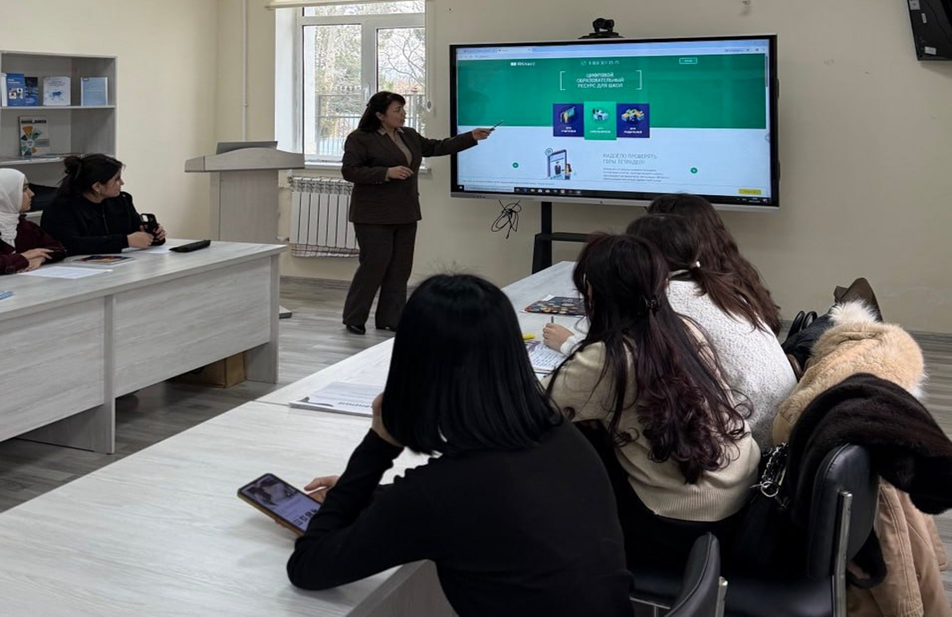
Design of Interactive Learning Materials in Teaching Russian – creation of digital educational resources and the use of innovative platforms.
General Linguistics – theoretical foundations of linguistics and the history of linguistic thought.
Linguocultural Studies – language as a reflection of culture and the national-cultural specifics of speech behavior.
Linguistic Analysis of Literary Text – methods of analyzing the structure, semantics, and stylistics of a literary work.
View materials: syllabi of the Department of Russian Linguistics
Work with gifted students is a priority area of the Department’s educational and research activities. It is aimed at identifying, developing, and supporting the intellectual and creative potential of students, fostering their research competencies, and stimulating their academic and professional engagement.
Within this framework, individualized learning trajectories, academic mentoring, student involvement in research projects, and preparation for participation in Olympiads, conferences, and competitions at various levels are implemented. Special attention is given to the development of critical thinking, research analysis skills, and the public presentation of research results.
In order to create a favorable intellectual environment and bring together talented youth, specialized clubs operate within the structure of the Student Academy:
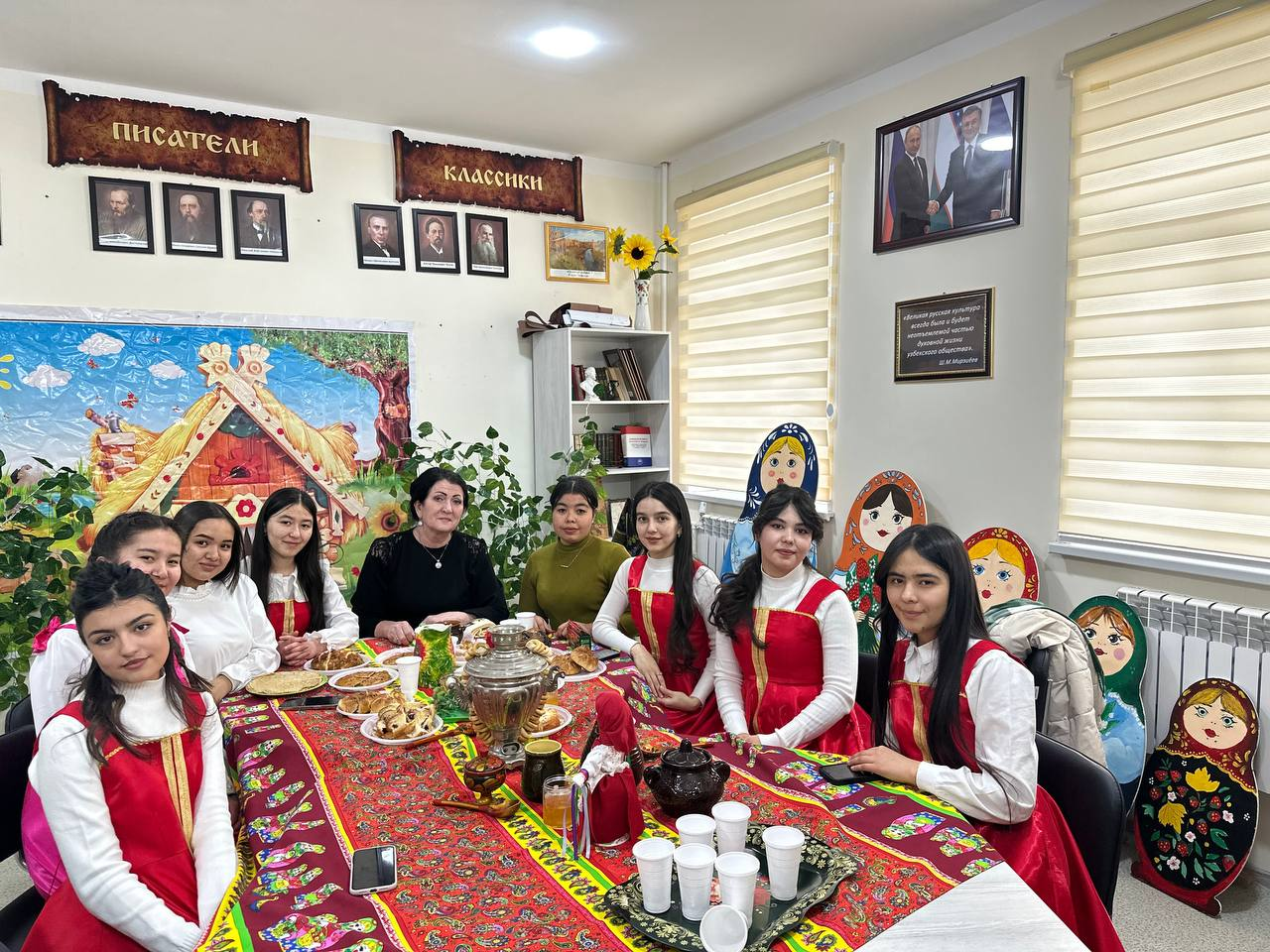
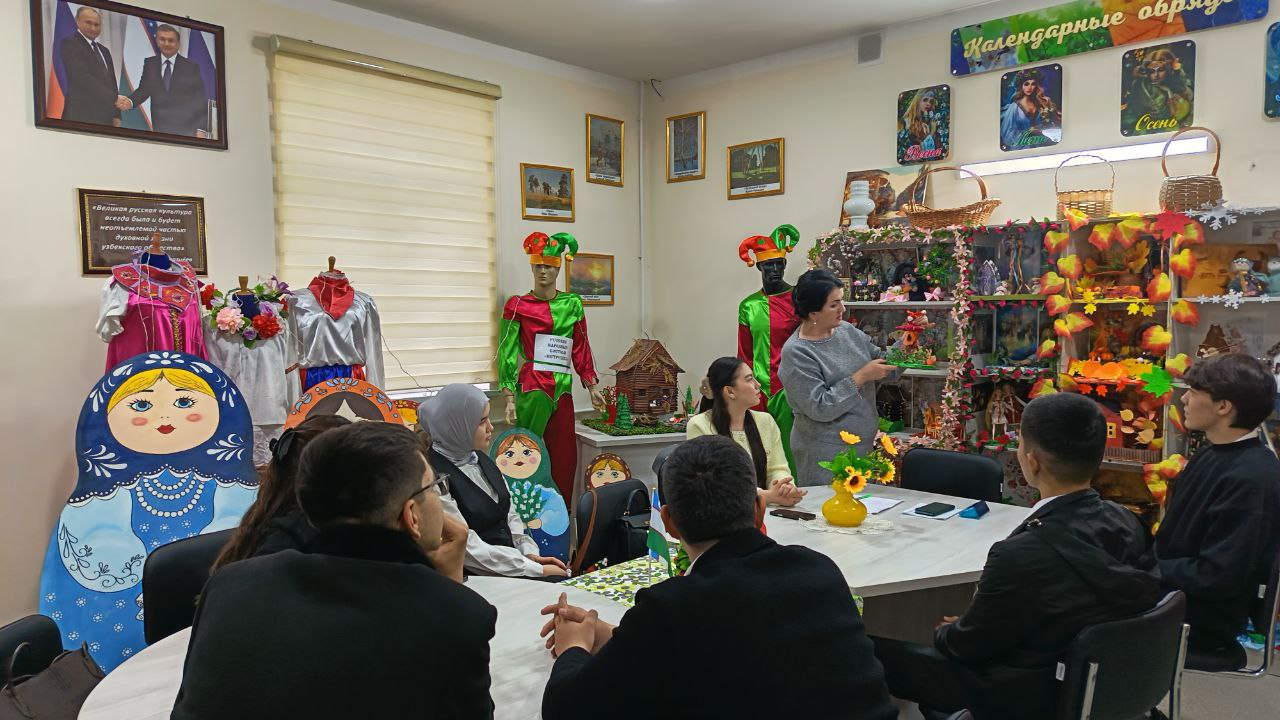
“Studying Russian Culture” – Head: N.F. Shagieva.
The club is focused on an in-depth study of the history, traditions, and spiritual values of Russian culture, the development of intercultural competence, and the organization of thematic meetings, round tables, and creative events.
Smart Learning Club – Headed by M. A. Shukurova
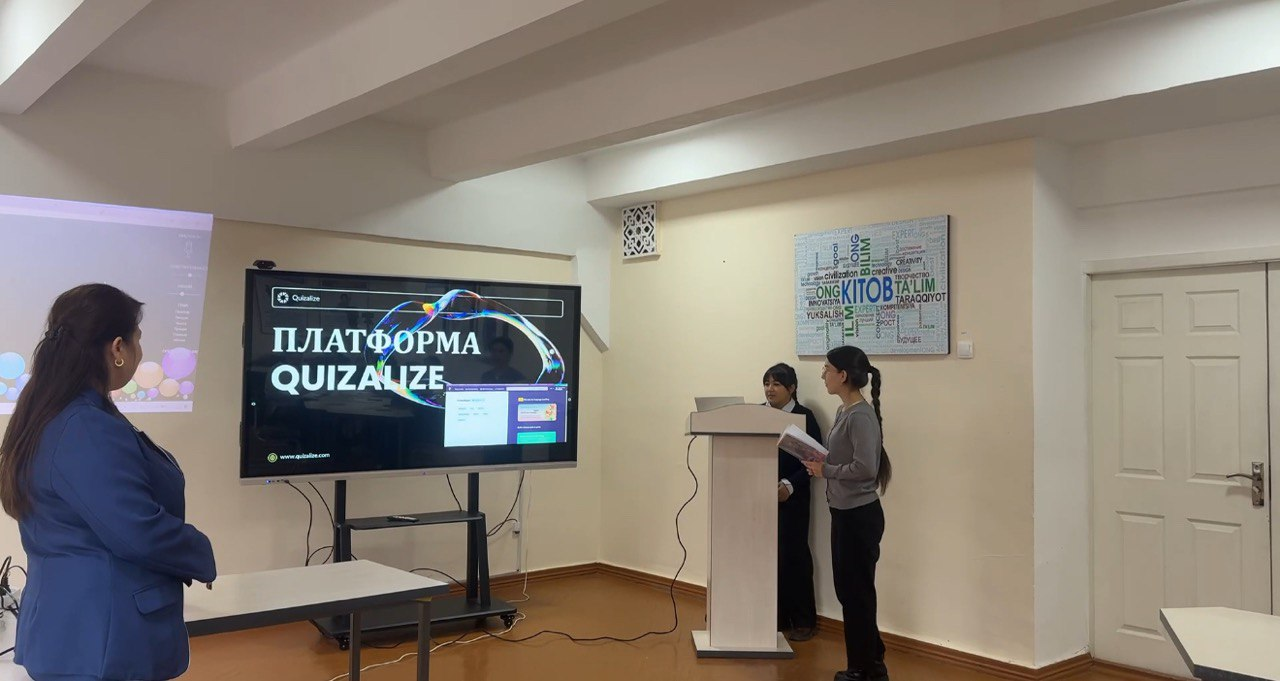
The club's activities focus on the implementation of innovative educational technologies, developing students' independent learning skills, project-based activities, and digital literacy.
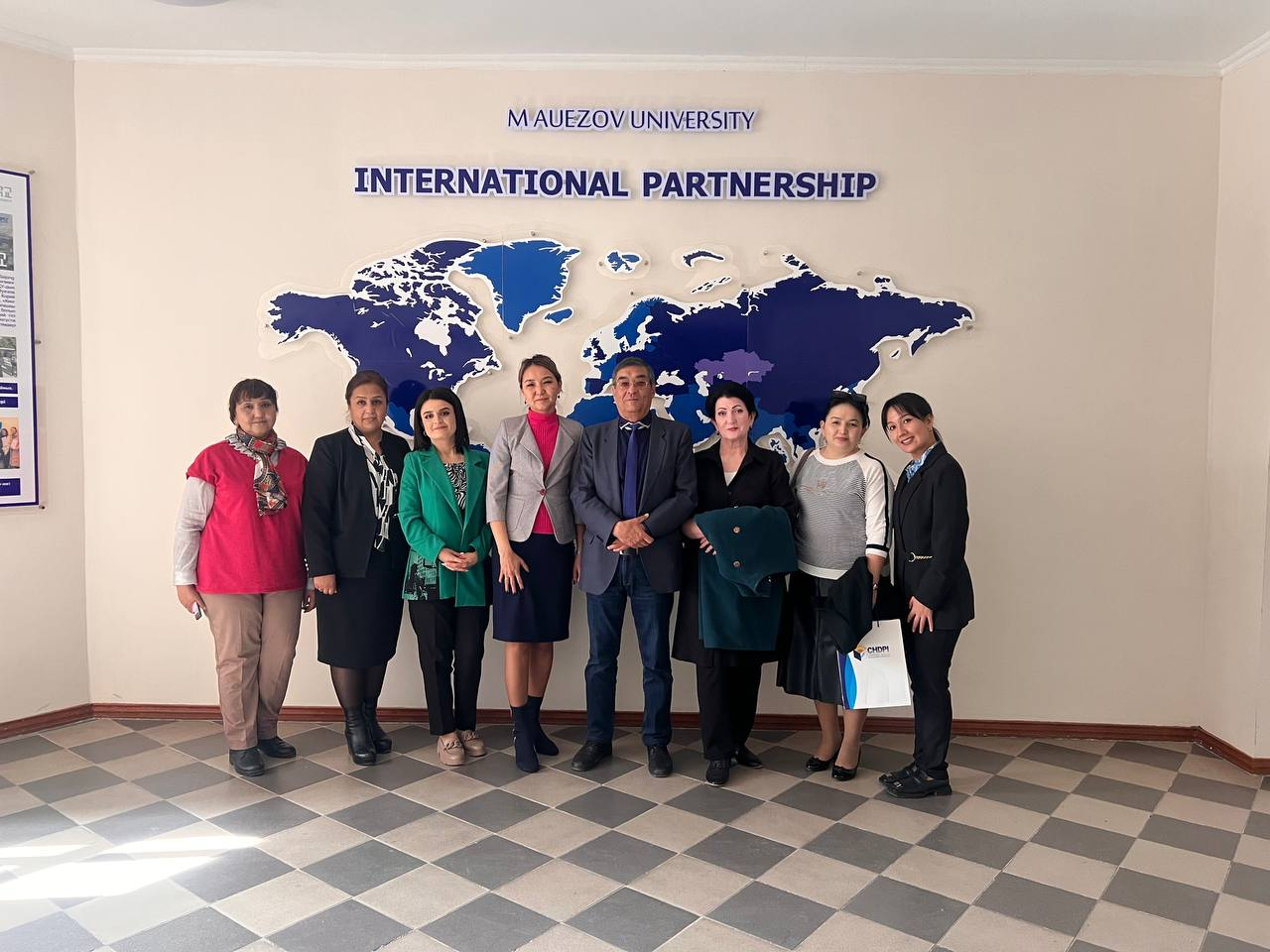
The Department активно develops international scientific and educational relations. One of its key partners is the South Kazakhstan University named after M. Auezov (Shymkent, Republic of Kazakhstan).
The partnership is aimed at:
– improving the quality of the educational process;
– developing joint research projects;
– academic mobility of faculty members and students;
– exchange of advanced pedagogical experience;
– participation in international conferences and projects.
Participation in International Conferences
October 31 – November 2, 2024
Faculty members of the Department, G.A. Khamidullaeva and M.A. Shukurova, took part in the International Scientific Conference “Language and Discourse of Modern Mass Media,” held at South Kazakhstan University named after M. Auezov.
March 27 – 28, 2025
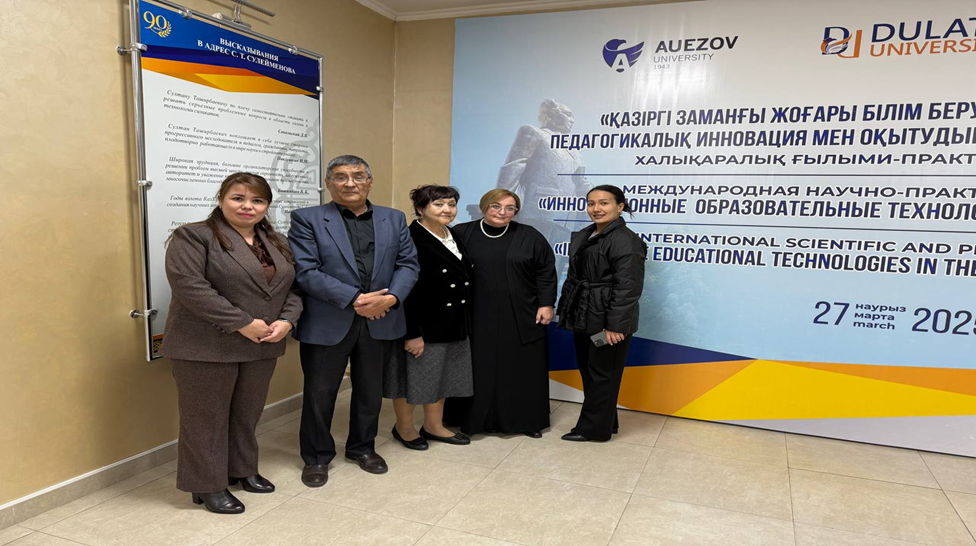
Faculty members of the Department, G.A. Khamidullaeva and M.A. Shukurova, participated in the International Scientific and Practical Conference “Innovative Educational Technologies in Modern Higher Education and School,” held at South Kazakhstan University named after M. Auezov.
Participation in international scientific events contributes to the expansion of academic cooperation, the exchange of scholarly achievements, and the implementation of innovative methodologies in the Department’s educational process.
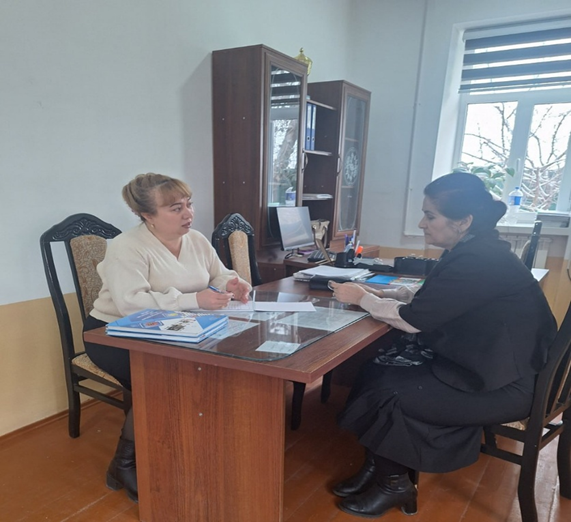
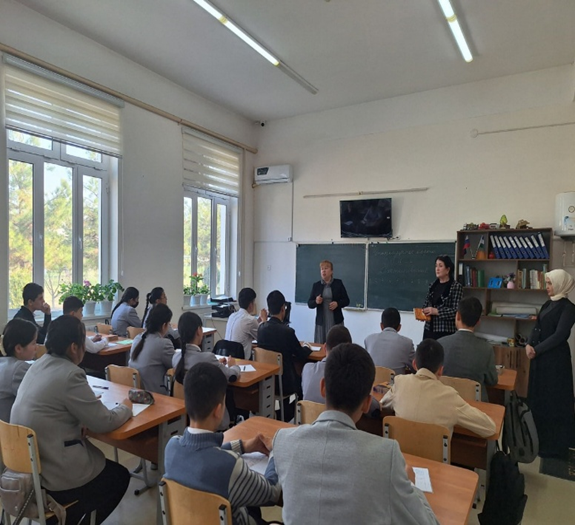
The Department of Russian Linguistics actively cooperates with a number of general secondary schools in the city of Chirchik and the Tashkent region in order to improve the quality of Russian language teaching, exchange pedagogical experience, and promote the Russian language among school students for whom it is not a native language.
In particular, in 2025, a cooperation agreement was signed and partnership relations were established with a specialized school and Secondary School No. 40 of Parkent district.
As part of methodological support for schools, the department’s faculty members conducted master classes for Russian language teachers on the following topics:
— “Game-Based Technologies in Russian Language Lessons”;
— “Intercultural Aspects of Teaching Russian as a Foreign Language (RFL)”.
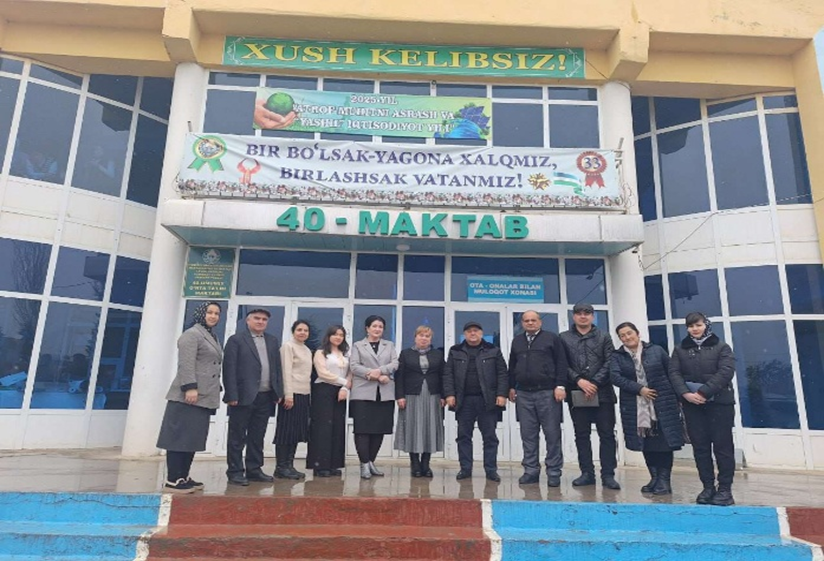
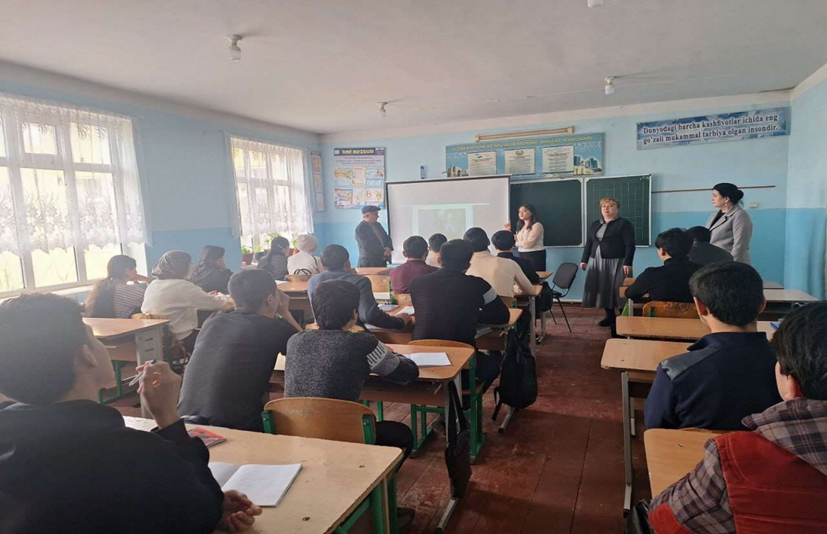
Providing consultations for teachers on organizing lessons in multicultural classrooms.
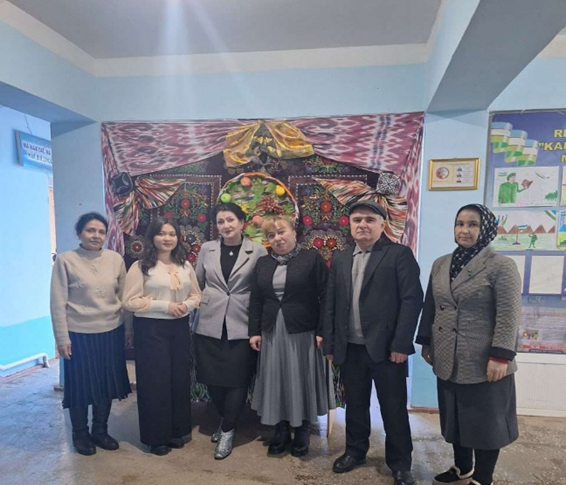
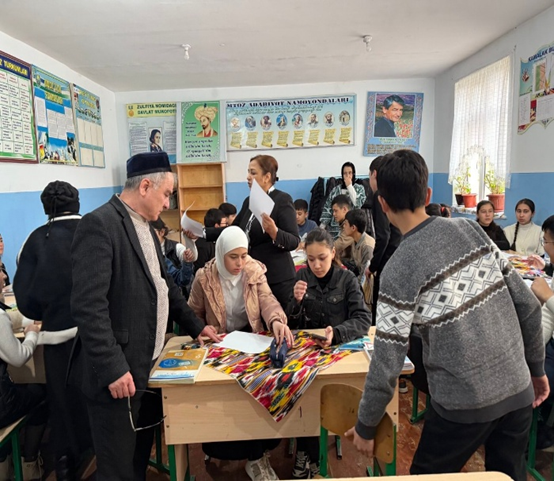
Provision of methodological materials and teaching resources.