
Department of Psychology
The Department of Psychology at Chirchiq State Pedagogical University, established in 2017, focuses on developing students' psychological skills and intercultural communication competence. It offers specialized programs in psychology, aiming to enhance the quality of education and foster scientific research in applied psychology, including innovative areas like Neurography and various therapies.
DEPARTMENT OF PSYCHOLOGY
Year of Establishment: 2017 Address: Tashkent region, Chirchiq State Pedagogical University, Main building, Room 409. The Department of Psychology was established on August 27, 2017, by Decision No. 1 of the Council of Chirchiq State Pedagogical Institute of Tashkent region. Previously operating as part of the "Pedagogy and Psychology" department, it later separated as an independent department. Currently, the department is engaged in teaching specialized subjects for psychology specializations.
AIMS AND OBJECTIVES OF THE DEPARTMENT Department's Mission: The main task of the Department of Psychology is to develop students' psychological skills and to form their intercultural communication competence.
Department Strategy: Socio-psychological factors in the formation of human capital. This strategy focuses on criteria for improving higher education, science, and human capital, intellectual ability, scientific power, further development of talent, quick wit, sharpness of mind, ability to quickly acquire knowledge, quick understanding of problems, and the human ability to remember all things previously felt and imagined.
Our Goals:
- Conducting scientific research by studying the psychological state of children in preschool educational organizations in cooperation with them.
- Establishing cooperation with educational institutions, production enterprises, and other higher education institutions, as well as organizations in the "Psychological Counseling" service sector.
- Increasing the quality of psychology education through professionally oriented programs and advanced pedagogical methods.
- Expanding international cooperation – establishing partnerships with universities, the scientific community, and educational projects.
- Developing a scientific research environment – becoming an innovative center for applied psychology and psychological research.
Work Plan for the Strategic Development of the Department of Psychology for 2021-2025
CURRICULA The department conducts classes for bachelor's and master's students in specialized subjects of psychology.
- Labor and Engineering Psychology
- Family Psychology
- Pedagogical Psychology and Methodology of Teaching Psychology
- Introduction to Specialization
- Experimental Psychology
- Clinical Psychology
- Psychological Consultation and Psychocorrection
- Methods and Technologies of Psychological Data Processing
- Developmental Psychology and Differential Psychology
- General Psychodiagnostics
- Legal Psychology
- Management Social Psychology
- Methodology of Scientific Research
- Psychological Testing
- Quantitative and Qualitative Research Methods in Modern Psychology
- Cognitive Psychology
SCIENTIFIC-RESEARCH DIRECTIONS AND PROJECTS The Department of Psychology is conducting research in several strategic directions in its scientific-research activities. The following directions aim to conduct scientific research that meets modern educational requirements, expand cooperation with the national and international scientific community, and achieve practical results:
- Neurography - Subconscious Level: Developing individual work skills with "Neurography" in students and increasing their theoretical and practical knowledge is one of the priority areas of the department. Special attention is paid to developing students' competencies in teaching psychology, improving their critical thinking skills, and enhancing self-directed learning approaches. Additionally, effective work has been carried out to improve the educational process based on psycholinguistic approaches.
- Research on Bibliotherapy: The department's scientific research in this area is focused on studying national and international literary heritage to prepare bibliotherapy materials based on literature read and analyzed by students, and to develop the skill of recommending literature based on client problems.
- Music Therapy: A number of scientific works are being carried out in comparative linguistics within the scope of English and Uzbek languages. For instance, translation problems of paremias, international words, and legal terms are being analyzed from cognitive and pragmatic perspectives.
- Rapid Diagnostics - QD Psychologist Project: Research aimed at forming students' communicative and creative skills has been a key priority of the department. This project develops rapid diagnostic ability and facilitates the client work process. Through the application of innovative and creative approaches in rapid work, students' professional orientation and independent thinking skills are being developed.
- Fairy Tale Therapy: Research is being conducted to identify anxiety levels and the presence of fear in children through fairy tale therapy, to eliminate and correct weak communicative abilities, and in this regard, many studies are being carried out based on Uzbek literature in the direction of national values and moral education.
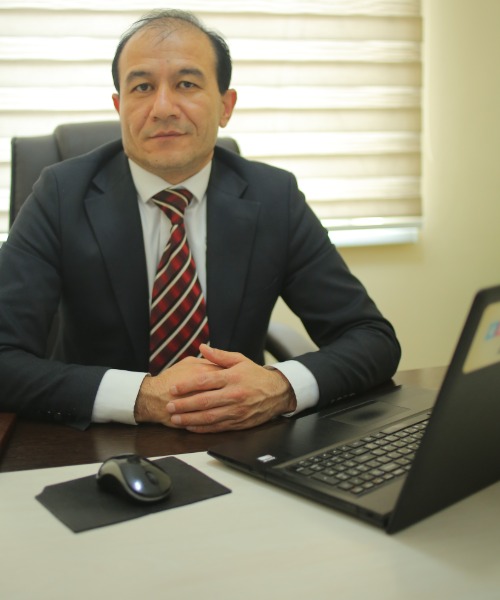
Eshnayev Nortoji Jumayevich
Head of Department
Candidate of Philosophy, Associate Professor
- Phone: +998 99 853 16 80
- Email n.eshnayev@cspu.uz
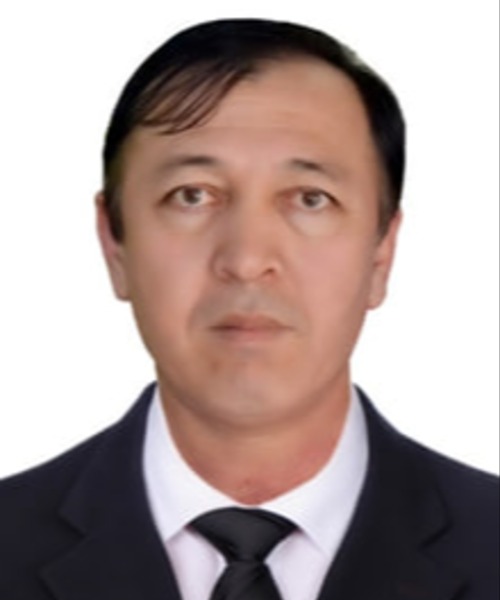
Avlaev Orif Umirovich
Professor of the Department
Doctor of Science in Psychology (DSc)





- Phone: +998938742755
- Email o.avlayev@cspu.uz

Burteshova Aliya Burxonovna
Kafedra o‘qituvchisi
- Phone: +998 99 4072341
- Email a.burteshova@cspu.uz

Dilmurodova Zilola Davron qizi
O‘qituvchi
- Phone: +998 ( 88 ) 8541691
- Email z.dilmurodova@cspu.uz
Madgapilova Nargiza Talipjanovna
Department teacher
- Phone: +998482387
- Email nargizamadgapilova@gmail.com

Meyliyeva Mo‘tabar Sayfullayevna
Katta o‘qituvchi
- Phone: +998994868425
- Email m.meyliyeva@cspu.uz

Mirzaraximova Gulnora Ikromovna
Head teacher
- Phone: +998998948527
- Email g.mirzaraximova@cspu.uz
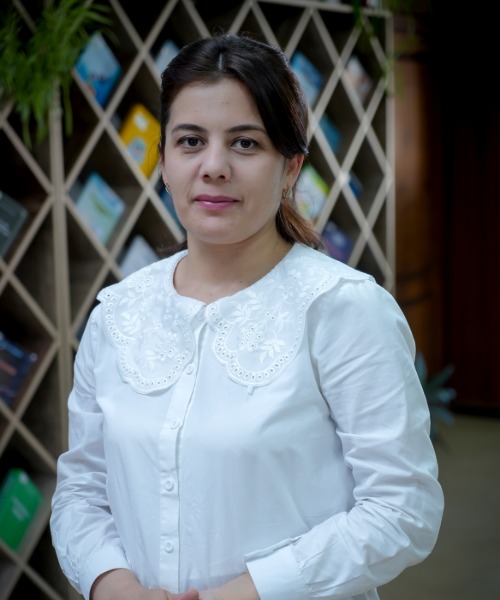
Radjabova Zuxra Mirzotilloyevna
Kafedra o‘qituvchisi
- Phone: +998 99 892 98 02
- Email z.radjabova@cspu.uz

Rahimova Xurzoda Kamulovna
O‘qituvchi
- Phone: +998717166805
- Email x.raximova@cspu.uz

Raxmanova Dilfuza Uchkunovna
Dotsent vazifasini vaqtincha bajaruvchi
- Phone: +998 97 010 13 66
- Email d.raxmonova@cspu.uz

Samarova Shoxista Rabidjanovna
Kafedra Dotsenti
- Phone: +998 90 914 90 64
- Email s.samarova@cspu.uz

Tojiboyev Marat Normadovich
Katta o‘qituvchi
- Phone: +998717166805
- Email m.tojiboyev@cspu.uz
Turaqulov Bo’ri Norboyevich
Kafedra Dotsenti
- Phone: +998915764801
- Email b.turakulov@cspu.uz

Umarova Shoxida Absalamovna
Kafedra o‘qituvchisi
- Phone: +998717166805
- Email s.umarova@cspu.uz
Xudayberdiyev Oybek Gafurovich
Kafedra o‘qituvchisi
- Phone: +998998500186
- Email o.xudayberdiyev@cspu.uz
Xusanova Nigina Baxtiyor qizi
Kafedra o‘qituvchisi
- Phone: +998 8998560598
- Email n.xusanova@cspu.uz

Yuldasheva Saodat Mamasakhatovna
head teacher
- Phone: +998 99 787 80 30
- Email s.yuldasheva@cspu.uz


Mirkosimova Xulkar Mirobidovna
Òqituvchi
- Phone: +998903349747
- Email h.mirkosimova@cspu.uz
- 07 Apr, 2026
- Announcements
Chirchiq davlat pedagogika universitetida harbiy-vatanparvar...
chirchiq-davlat-pedagogika-universitetida-harbiy-vatanparvarlik-yo-nalishida-yangi-bosqich-ilm-innov...
Read More
- 20 Dec, 2024
- Announcements
Чирчиқ давлат педагогика университети Педагогика факультети...
circikˌ-davlat-pedagogika-universiteti-pedagogika-fakul-teti-psihologia-kafedrasida-individual-ta-li...
Read More
- 15 Mar, 2026
- Announcements
Musiqa terapiyasi loyhasi ma'lumoti
musiqa-terapiyasi-loyhasi-ma-lumoti
Read More

- 28 Nov, 2025
- Announcements
Shaxs xususiyatlari bo'yicha ma'lumot
shaxs-xususyatlari-bo-yicha-ma-lumot
Read More
- 24 Nov, 2025
- Announcements
Psixokonsultatsiya loyihasi ma'lumoti
psixokonsultatsiya-loyihasi-ma-lumoti
Read MoreIncreasing the Scientific Potential of the Department
It is planned to increase the scientific potential of the department from 18% to 50%.
In 2025, favorable conditions will be created to support the implementation of dissertation research by one faculty member pursuing the Doctor of Science (DSc) degree and ten faculty members pursuing the Doctor of Philosophy (PhD) degree who are actively engaged in academic activities at the department.
Faculty Members Planning Dissertation Defense in 2025:
N. J. Eshnaev (DSc)
Sh. S. Abdusamatova (PhD)
S. M. Yuldoshova (PhD)
G. I. Mirzarakhimova (PhD)
D. U. Rakhmanova (PhD)
M. N. Tojiboev (PhD)
Z. M. Rajabova (PhD)
Z. D. Dilmurodova (PhD)
N. T. Madgapilova (PhD)
M. S. Melieva (PhD)
K. E. Burieva (PhD
Enhancing Research-Oriented Competencies of Faculty and Psychology Students
The department aims to enhance the research-oriented competencies of faculty members and students majoring in Psychology by increasing their participation in international and national conferences and seminars, scientific and educational projects, as well as national and international joint grant programs
Strengthening International Academic Cooperation
Collaboration between the department’s faculty members and foreign higher education institutions will be strengthened. In particular, cooperation will be established with the following institutions:
Ural Federal University (Russian Federation),
Universitas Pendidikan Indonesia (Indonesia),
IKSAT Research Institute,
Çukurova University (Türkiye).
Student Support
In order to scientifically and practically substantiate the concept that “Individualized education is the foundation of professional competence”, and to actively involve students in project-based activities, it is planned to increase the overall professional competency level of students from 47% to 90%.
Based on coordinated activities of highly qualified and academically experienced faculty members, students will be actively involved in the following projects:
“Neurographics” (D. E. Abduqodirova) — an innovative graphic method for developing creative thinking;
“Rapid Diagnostics” (Z. D. Dilmurodova) — a new approach to identifying psychological problems;
“Music Therapy” (N. Sh. Rozmatova) — the positive impact of music on mental and emotional well-being;
“Fairy Tale Therapy” (N. B. Husanova) — addressing children’s psychological problems through storytelling;
“HR Manager” (N. Sh. Rozmatova) — training in modern human resource management;
“Bibliotherapy” (N. Sh. Rozmatova) — restoring psychological balance through reading;
“Consultant Psychologist” (N. T. Madgapilova);
“Trainer Psychologist” (D. E. Abduqodirova).
Through active student engagement in these projects, theoretical and practical scientific research will be carried out.
Psychological Assessment and Support of University Students
The department plans to conduct comprehensive theoretical and practical psychological assessment and support of students from all faculties of the university, including those residing in student dormitories, through participation in eight projects organized by the Department of Psychology:
“Neurographics” — 7 students;
“Rapid Diagnostics” — 8 students;
“Music Therapy” — 9 students;
“Fairy Tale Therapy” — 17 students;
“HR Manager” — 13 students;
“Bibliotherapy” — 8 students;
“Consultant Psychologist” — 12 students;
“Trainer Psychologist” — 10 students.
Research Activities of the Department of Psychology
The Department of Psychology conducts research activities in several strategic directions. These areas aim to carry out scientific research that meets modern educational requirements, expand cooperation with national and international academic communities, and achieve practical outcomes.
Neurographics at the Subconscious Level
One of the department’s priority areas is developing students’ skills in individual work with Neurographics, as well as enhancing their theoretical and practical knowledge. Special attention is given to developing students’ competencies in psychology education by improving their critical thinking skills and refining approaches focused on independent learning. In addition, effective efforts have been made to improve the educational process based on psycholinguistic approaches.
Research in Bibliotherapy
Scientific research in this area focuses on preparing bibliotherapy materials based on literature read and analyzed by students, as well as developing students’ ability to recommend appropriate literature according to clients’ psychological needs. These studies are aimed at exploring national and international literary heritage.
Music Therapy
Within this direction, a number of scientific studies are being conducted in the field of comparative linguistics, particularly within the framework of the English and Uzbek languages. Issues related to the translation of paremias, internationalisms, and legal terminology are being analyzed from cognitive and pragmatic perspectives.
Rapid Diagnostics – QD Psychologist Project
Research aimed at developing students’ communicative and creative skills remains one of the department’s key priority areas. This project enhances rapid diagnostic abilities and facilitates the process of working with clients. Through the application of innovative and creative approaches in rapid assessment processes, students’ professional orientation and independent thinking skills are being developed.
Fairy Tale Therapy
Through fairy tale therapy, research is being conducted to identify levels of anxiety and the presence of fears in children, as well as to eliminate and correct deficiencies in their communicative abilities. In this context, numerous studies based on Uzbek literature are being carried out, focusing on national values and moral education.
These research directions contribute to strengthening the department’s scientific and research potential and to the development of new, modern methodologies.
Local and International Cooperation
The Department of Psychology consistently develops local cooperation in order to improve the quality of education, advance modern pedagogical methods, and provide additional knowledge to secondary school students and vocational education learners. Within this framework, effective cooperation has been established with general secondary schools of Chirchiq city as well as the Chirchiq Vocational School.
Offline and Online Seminars
Faculty members of the department regularly organize seminars and master classes for teachers and students. These activities are aimed at promoting modern psychological approaches, implementing innovative methods of teaching psychology in practice, and improving the overall quality of education.
Methodological Support and Experience Exchange
Within partner secondary and vocational schools, consultations and training sessions in psychology are conducted on a regular basis. These activities contribute to enhancing the professional qualifications of local teachers and developing students’ psychological knowledge.
Development of Students’ Competencies
As part of the cooperation, master classes and practical training sessions on theoretical and applied psychology are conducted. In addition, recommendations are provided to promote a psychologically healthy learning environment for students.
The department plans to further expand local cooperation and implement new projects and initiatives aimed at integrating advanced methods of teaching psychology into the educational process.
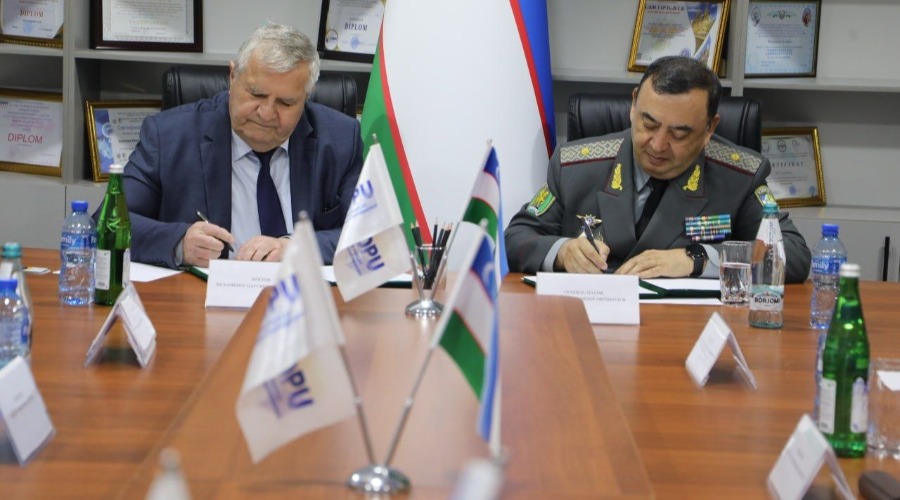
UPI (Universitas Pendidikan Indonesia, Indonesia)
Within the framework of cooperation with UPI, a bilateral agreement has been signed.
A delegation from UPI visited our university, and meetings were held to discuss and strengthen collaborative relations.
Our university delegation visited UPI and became acquainted with the university’s education system.
Within this cooperation, projects such as “Research Methodology” and “Guest Lecturer” are being implemented.
UFE (Ural Federal University, Russia)
Within the framework of cooperation with UFU, a bilateral agreement has been signed.
A delegation from UFU visited our university, and meetings were held to develop and strengthen cooperation.
Our university delegation visited UFU and became familiar with the university’s education system.
Clubs have been established under the department to enable students to study psychology in greater depth and to promote the formation of a healthy psychological environment. Through these clubs, students are able to:
✔ participate in interactive sessions focused on learning psychology;
✔ develop practical psychological skills and enhance their level of knowledge.
Within the framework of these clubs, various debates, competitions, and seminars are organized with student participation, creating opportunities to develop their psychological knowledge in real-life settings.
Orientation toward Scientific Activity
Faculty members of the department have developed special scientific platforms designed to guide students and young researchers toward scientific activity within an individualized educational environment.
Students have the opportunity to participate in scientific conferences and projects with their research papers, scientific articles, and innovative ideas.
Project Supervisor: O.G. Khudayberdiyev
Assigned Teachers: S.B. Tursunboev, Z.M. Radjabova, D.U. Rakhmanova, O. Ozodkulov.
Purpose of the Consultation Project:
To study the problems faced by students, namely to analyze educational, institutional, and personal issues and provide assistance in overcoming them;
to study the socio-psychological condition of the dean’s office, departments, and divisions, and to provide consultative services.
Objectives of the Consultation Project:
– conducting consultative work with clients referred by the responsible persons of the diagnostic project;
– providing psychological counseling aimed at correcting the causes of problems identified among students;
– providing psychological counseling aimed at correcting the causes of problems identified among teaching staff.
Starting from March 1 of the current year, psycho-consultative activities were carried out by the responsible members of the “Psychological Consultation Project” together with first- and second-year students of the Psychology program.
Among 111 students with identified problems from the following fields: preschool education, primary education, special pedagogy, language and literature, pedagogy, natural sciences, mathematics and informatics, and music education, 66 students with particularly serious problems were selected. After the initial psychodiagnostic assessment, problem-based students were selected and, depending on the type of problem, respondents with similar issues were divided into three groups.
Group 1 – problems related to communicative interaction and interpersonal relationships (20 students).
Group 2 – problems related to the loss of close relatives (23 students).
Group 3 – problems related to low self-confidence, dissatisfaction with internal and external states, and internal personal conflicts (23 students).
Individual psychological interviews were conducted with each participant in the selected groups.
During the interviews, it was also revealed that some students had “childhood-related psychological traumas.” Due to isolation, negative memories, anxiety, and shyness, they were unable to fully open up. On April 6, an additional follow-up diagnostic assessment (outside the main program, using projective methods) was conducted. As part of this assessment, the “Lüscher Color Test” and the projective method “Drawing Our Fears” were applied. The obtained psychological data were analyzed by the project supervisors and coordinators.
Results:
According to the results of the Lüscher Color Test, 31 students demonstrated a high level of unmet personal needs, the presence of personal anxiety, and a low need for active action and goal achievement. Gestalt therapy techniques were applied to these clients. Through methods of observing and analyzing their problems from an external perspective, ways to resolve their issues were identified.
The remaining 33 students showed a high level of need for satisfaction, calmness, and stable positive emotional attachment. During consultations, it was revealed that these students had negative relationships with their fathers, and as a result of family conflicts, negative emotions toward their fathers (hatred, anger, loss of forgiveness) had developed. Assistance was provided through art therapy and the “Emotional Reflection” technique, aimed at transforming negative memories related to the father into positive ones. In this therapy, the client imagines meeting their father, forgives him, expresses emotions, frees themselves from negative feelings, learns to accept the situation, and transforms relationships in a positive direction, ultimately achieving positive outcomes.
Due to biological limitations, 2 students were only able to depict their inner fears. Their internal motivation was weak, self-confidence was low, and they were in a completely withdrawn state. To address problems related to the student and their family, as well as personal inner fears, meditative exercises titled “Hello, Me” and “My Favorite Organ” were conducted with the clients. During therapy, the clients achieved emotional relaxation and developed skills to change their attitudes toward situations. They are currently continuing their activities with us to further develop their motivation.
From March 1 to May 10, individual and group corrective sessions were conducted every Friday and Saturday with the above-mentioned students. Out of 111 students, 45 achieved significant reflection already during the first consultation, became aware of themselves, focused on the root causes of their problems, and as a result obtained quick solutions and completed the process with positive outcomes.
The remaining 66 clients required additional consultations due to the severity of their psychological problems, and corrective and developmental work with them is ongoing. An individual psychological profile was created for each student, including diagnostic analysis, identified problems during interviews, and achieved results as supporting documentation.