
Primary Education Theory and Practice Department
Established in 2019 and becoming independent in 2021 at Chirchiq State Pedagogical University, the Primary Education Theory and Practice Department focuses on training future primary school teachers. It provides methodological foundations, enhances professional skills, and conducts extensive research through its "Future Education" laboratory, aiming to improve the quality and effectiveness of primary education.
The Department of Theory and Practice of Preschool and Primary Education was established on August 27, 2019, by Decision No. 1 of the Academic Council of the Chirchik State Pedagogical Institute of Tashkent Region as part of the Faculty of Pedagogy. Initially, it functioned within the structure of the Department of Preschool and Primary Education and Sports, and later within the Department of Primary Education. In 2021, it was separated as an independent department.
At present, the department is engaged in training qualified personnel for the primary education system and in developing educational literature and methodological guidelines for primary education.
The main goal of the Department of Theory and Practice of Preschool and Primary Education is to provide future preschool educators and primary school teachers with methodological foundations of education, as well as with teaching methods and techniques used in the educational process, thereby supporting their acquisition of knowledge and enhancement of professional competencies.
Based on this goal, the department pursues the following objectives:
- to deepen theoretical and pedagogical knowledge in the field of preschool and primary education;
- to prepare preschool educators and primary school teachers for effective professional activity in the educational process;
- to apply and further develop modern pedagogical technologies in education.
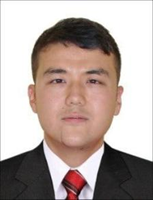
Mambetaliyev Qayrat Anarbay o‘g‘li
Kafedra o‘qituvchisi







- Phone: +998993684235
- Email q.mambetaliyev@cspu.uz
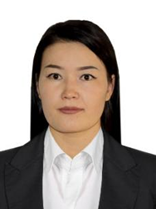
Abdullayeva Uljalg‘as Tulegen qizi
Department teacher

- Phone: +998 99 401 92 45
- Email u.abdullayeva@cspu.uz
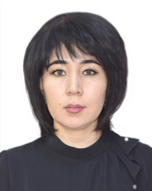
Haydarova Gulruh Muhammadaminovna
Kafedra o‘qituvchisi
- Phone: +998935086421
- Email g.haydarova@cspu.uz

Ziyadullayeva Dilafro‘z Narzulla qizi
Kafedra o‘qituvchisi
- Phone: +998717166805
- Email ziyadullayevadilafroz@gmail.com
Azamatova Dildora Shuxrat qizi
O'quv ishlari bo'yicha dekan o'rinbosari, Kafedra o'qituvchisi
- Phone: +998998418293
- Email yuldashovadildora2@gmail.com
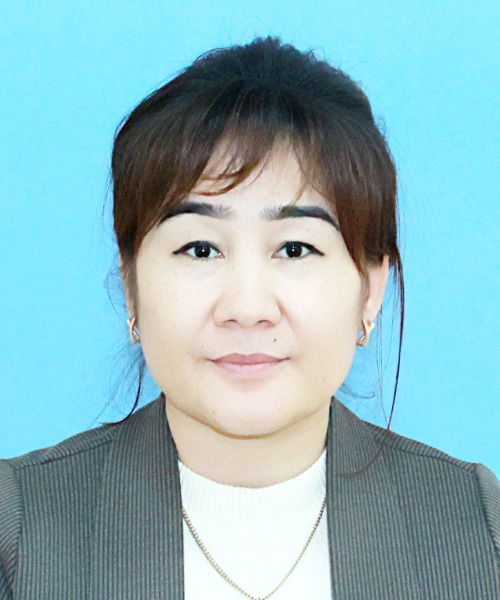
Bo'ronova Iroda Bo'ronovna
Kafedra oqituvchisi
- Phone: +998975993939
- Email irodaburonovna@gmail.com
Boliyeva Lola Shukurovna
Kafedra o‘qituvchisi
- Phone: +998717166805
- Email boliyevalola1974@gmail.com
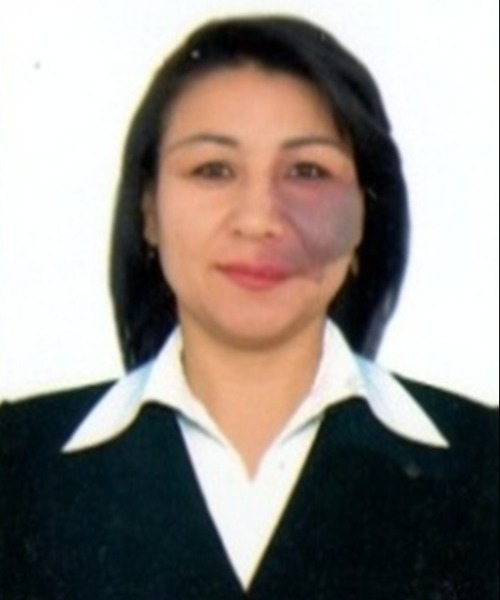
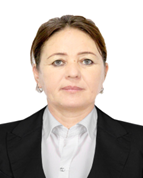
Ismanova Ma'mura Abdumoʻminovna
Katta o‘qituvchi
- Phone: +998999703370
- Email ismanovamamura717@gmail.com

Jumaboyeva Marhabo Shokir qizi
Kafedra o‘qituvchisi
- Phone: +998959860877
- Email jumaboyevamarhabo@cspu.uz
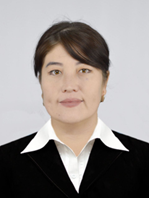
Kodirova Muyassar Eshmamat qizi
Kafedra o‘qituvchisi
- Phone: +998919029195
- Email muyassarkodirova67@gmail.com
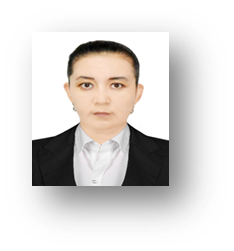
Mutalova Dilnoza
Head of Department
Doctor of Philosophy (PhD) in Pedagogical Sciences
- Phone: +998974903475
- Email dilnozam232@gmail.com
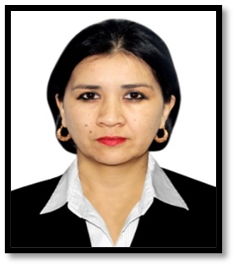
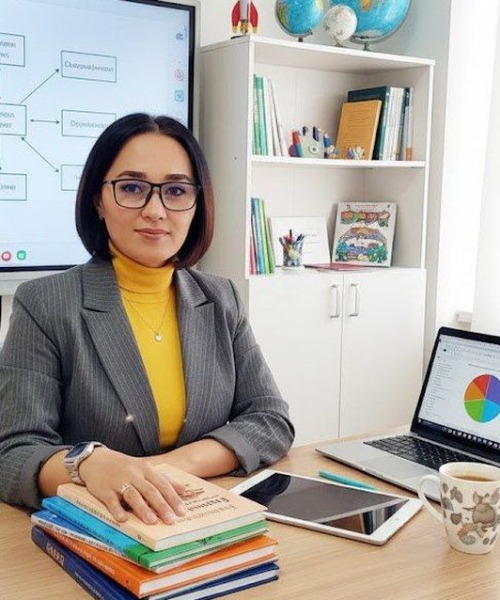
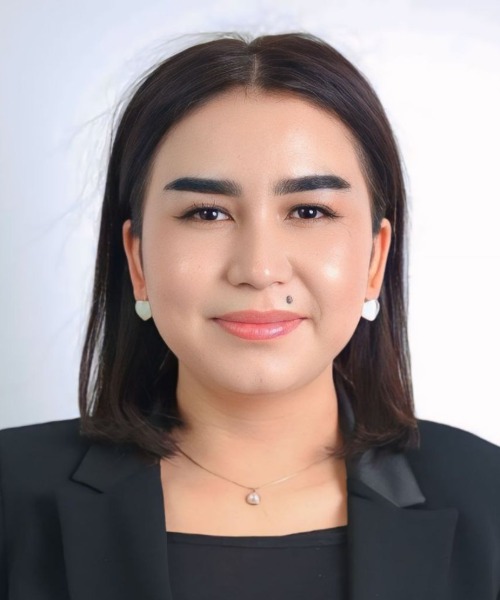
O‘razaliyeva Sojida Tojiboy qizi
Kafedra o‘qituvchisi
- Phone: +998939040300
- Email sojidaorazaliyeva5@gmail.com
Quralbayeva Lazzat Jarasboy qizi
Kafedra o‘qituvchisi
- Phone: +998717166805
- Email quralbayevalazzat@cspu.uz
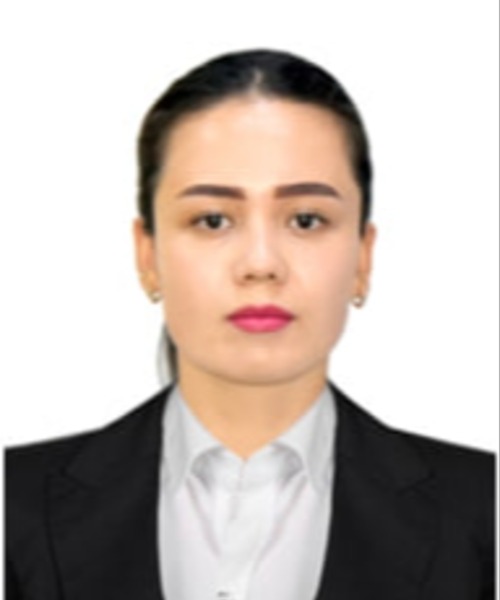
Qurbonova Bonu Rustam qizi
Kafedra o'qituvchisi
- Phone: +998888762126
- Email bonuqurbonova0505@gmail.com
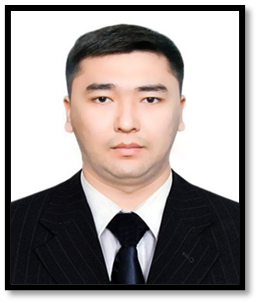
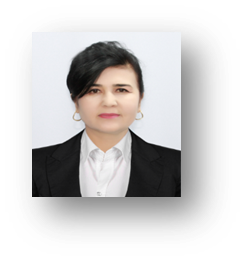
Teshabayeva Zamira Sobirovna
Dosent
PhD in Pedagogical Sciences.
- Phone: +998717166805
- Email zteshabaeva1971@gmail.com
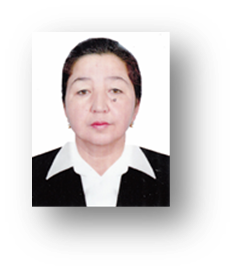
Tursunboeva Muxtabar Dehqonovna
Kafedra o‘qituvchisi
- Phone: +999974400467
- Email mu974400467@gmail.com
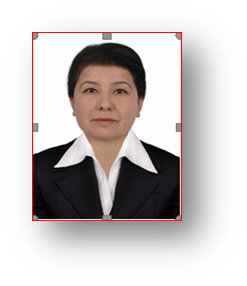
Urmonova Toshxon Ibragimovna
Kafedra o‘qituvchisi
- Phone: +998717166805
- Email ormonovatoshxon@gmail.com
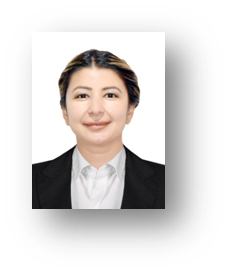
Xidoyatova Nigora Avazovna
Kafedra o‘qituvchisi
- Phone: +998955535508
- Email khidoyatovanigora@gmail.com
Xudayqulova Fazilat Bo‘riyevna
Kafedra o‘qituvchisi
- Phone: +998717166805
- Email xudoyqulova.f@cspi.uz
Zayniddinova Muborak Toʻlagan qizi
O'qituvchi
- Phone: +998941458708
- Email horunalrashid2235@gmail.com
Fields of study and curricula.
Since the opening of the department, training has been conducted in the following educational areas.
Bachelor:
60110200 - Preschool Education
5111700 - Primary education and sports and educational work;
60110500 - Primary education;
Master's degree:
70110201 - Theory and Methodology of Education and Upbringing (Preschool Education)
70110401 - Theory and Methodology of Education and Upbringing (Primary Education)
QUALITY OF EDUCATION AND SYSTEM OF ASSESSMENT OF THE DEPARTMENT
Quality control of education
The Department of Theory and Practice of Preschool and Primary Education relies on internal and external monitoring systems to improve the quality of education:
External monitoring
The quality of education is regularly analyzed through the platform of the University's Working Group on Education Quality Control.
The Education Quality Control Commission within the Faculty of Tourism constantly monitors the assessment system and the educational process.
Internal monitoring
Internal control of the department is carried out by the department's instructor, Dilnoza Abdurashidovna Mutalova.
Presented at department meetings, where shortcomings in the educational process and measures for improvement are discussed.
Assessment system
The student assessment system is described in detail in the department's curricula, and the assessment process is carried out on the basis of a credit-modular system.
Interim assessment: students take a written assessment for interim assessment, which allows them to check their written speech skills.
Final Assessment: Students will be assessed in writing.
Grade | For the Educational Department | Traditional | For professors and teachers (Evaluation criteria) | |
|---|---|---|---|---|
5-point system | Percentage of assimilation | |||
| A+ | 4,51 - 5 | 91 - 100 | Excellent | The student quickly masters the material independently; does not make mistakes; actively participates in classes; gives complete and accurate answers to questions. |
| A | 4,26 - 4,5 | 86 - 90 | The student independently masters the materials; does not make mistakes; gives complete and accurate answers to questions. | |
| B+ | 4,01 - 4,25 | 81 - 85 | Good | The student has mastered the material well and can express it logically; actively participates in classes; answers questions completely and accurately, but makes minor mistakes. |
| B | 3,51 - 4,0 | 71 - 80 | The student has mastered the material well, gives complete and accurate answers to questions, but makes minor mistakes. | |
| C+ | 3,26 - 3,5 | 66 - 70 | Satisfactory | knows the main materials, but has difficulty expressing them clearly; lacks clarity and completeness in answering questions; makes some mistakes in presenting materials; experiences difficulties in the communication process. |
| C | 3,0 - 3,25 | 60 - 65 | Knows the main materials, but has difficulty expressing them clearly; lacks accuracy and completeness in answering questions; makes some errors in presenting materials; | |
| F | less than 3.0 | Below 59 | Unsatisfied | has not mastered the materials; cannot answer the questions; does not participate in classes |
Student feedback and feedback system
In order to ensure the transparency of the process of listening to and evaluating the opinions of students, a feedback mechanism has been established at the department.
Appellation process: within 24 hours after the announcement of the results of the final assessment, students have the opportunity to contact the department's email address: matbuot nazariyasivaamaliyoticspu@gmail.com. This process serves to eliminate uncertainties that may arise during the assessment process and to take into account the opinions of students.
Regular feedback: surveys and analytical reports are regularly conducted to gather feedback from students on the quality of education, and appeals are reviewed. Based on these results, measures aimed at further improving the educational process will be developed.
Research Areas of the Department
Priority scientific directions aligned with national socio-economic development
In conducting scientific research at the department, a number of research areas aligned with the priority directions of socio-economic development of the country have been identified. In accordance with the Rector’s Order dated August 30, 2022 No. 01-191 on enhancing scientific potential and innovation, the research laboratory “Education of the Future” was established.
The main objective of this laboratory is to conduct innovative, fundamental, and applied research on key issues of primary education. Faculty members actively publish scientific and theoretical articles, and research on primary education problems is prioritized in the dissertation topics of young researchers.
Priority Research Area
Improving the quality and effectiveness of primary education based on cluster approaches
Publication of scientific articles and methodological recommendations within the framework of the “Education of the Future” research laboratory.
Integration of cluster-based research directions into dissertation topics of professors and teachers.
Orientation of published research and teaching materials toward increasing the effectiveness of primary education.
Scientific collaboration with primary school teachers of general education schools in the Tashkent region on a cluster basis.
Research activities of the department’s academic staff are supervised by the Faculty Scientific Council. In addition, based on the Rector’s Order dated July 5, 2021 No. 01-180, the “Future Teacher – Scientific Research Laboratory” was established, where professors, master’s students, and undergraduate students jointly conduct scientific research.