- Home
- Department
- Department of Genetics and Evolutionary Biology
Department of Genetics and Evolutionary Biology
Established in 2020, the Department of Genetics and Evolutionary Biology, led by Professor B.Kh. Amanov, aims to be a leading center for biological science through continuous education, high-impact research, and international collaboration. The department's mission is to enhance educational quality in biology, improve training systems for qualified personnel, boost research potential, and commercialize scientific findings, all while fostering academic freedom, professional readiness, and global responsibility.
Department History
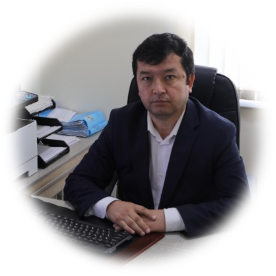
The Department of Genetics and Evolutionary Biology was established in accordance with Decision No. 1 of the Council of Tashkent Region Chirchik State Pedagogical Institute, dated August 29, 2020. Since its establishment, it has been headed by Doctor of Biological Sciences, Professor B.Kh. Amanov.
Department's Strategic Task, Goal, and Mission
Department's Strategic Task: To develop the department's continuous education system, high-performance scientific research, and international cooperation to become one of the leading centers for biological science and research.
Department of Genetics and Evolutionary Biology's Strategic Goal: To further enhance the quality of education in educational institutions by introducing modern educational programs based on the development of science and innovation, and to implement distance learning through the formation of modern pedagogical and smart technologies, such as electronic modules, in the educational process.
Strategy Mission: To develop the continuous education system based on improving the quality and coverage of biology education, enhance the system of training qualified personnel, strengthen the potential and effectiveness of scientific research, and create and implement effective mechanisms for commercializing research results.
Department's Prospective Vision: To improve the individual education system in enhancing the quality of education in biological sciences (modern genetics), prepare textbooks based on modern laboratories and the latest foreign literature for educational institutions, establish close communication and cooperation between education, science, and production sectors in personnel training and utilization of scientific results, and commercialize promising scientific developments.
Department Motto: "The key to the right path is knowledge."
Main Directions of the Department's Strategy
In implementing the department's long-term and mid-term strategic plan, the following strategic initiatives (SIs) play a key role:
- SI-1 – "Development of Educational, Research, and Scientific Resources in Modern Genetics and Biological Sciences"
- SI-2 – "International Cooperation"
Department's Goals and Objectives (Education, Scientific Research, International Cooperation)
The training of highly qualified biology teachers and the establishment of modern biological research based on innovative educational technologies are based on the following principles:
- Academic freedom: Students and professors/teachers should be free to conduct and express their opinions and research activities.
- Quality education: Organizing high-quality education that meets modern standards and labor market demands.
- Professional training: Providing students not only with theoretical knowledge but also with practical skills necessary for the successful professional activity of competitive personnel.
- International cooperation and academic activity: Organizing international exchange of students, professors/teachers, and researchers with higher education institutions in various countries to develop the continuous education process, gain and enrich high experience through international cooperation, and collaborate on international-level scientific research projects.
- Flexibility and individualization principle: Providing students with choices by expanding educational directions and research activities, taking into account different learning styles and student needs.
- Career support: Offering opportunities for professional development to students (internships, participation in projects with enterprises, and assistance in finding employment after graduation) to increase the effectiveness of pedagogical education.
- Global responsibility and sustainable development: Educators should teach learners about sustainable development, human rights, global health, ecological awareness and responsibility, adherence to ethical norms in educational and scientific activities, academic honesty, and respect for intellectual property rights.
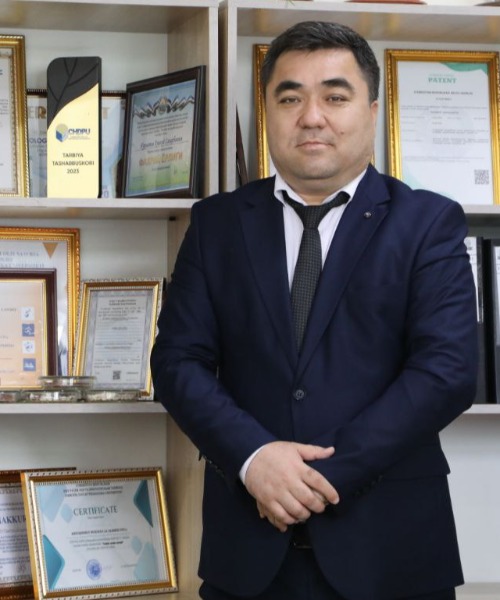
Amanov Bakhtiyar Khushbakovich
Head of the Department of Genetics and Evolutionary Biology
Doctor of biological sciences

- Phone: +998717166805
- Email amanov.81@bk.ru
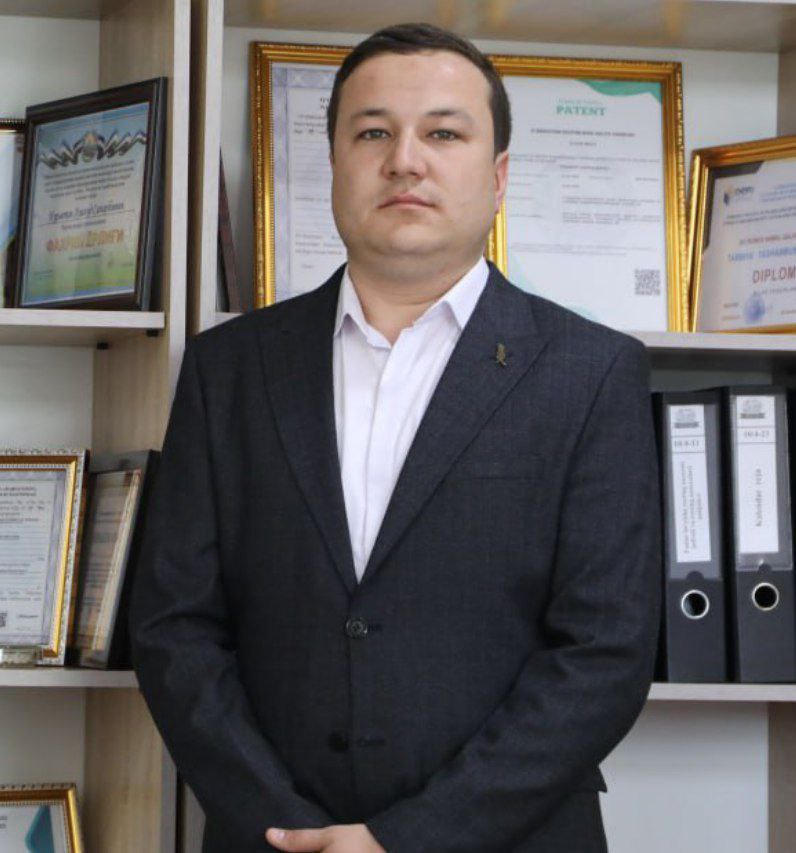
Abdikodirov Murodkhuja Alisherogli
Associate Professor of the Department
Doctor of Philosophy (PhD) in Biological Sciences
- Phone: +998336091916
- Email m.abdiqodirov@cspu.uz

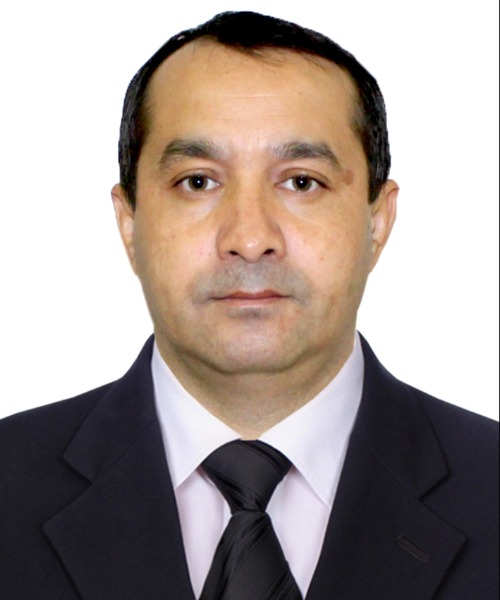
Muminov Hasan Alikulovich
Professor of the Department of Genetics and Evolutionary Biology
Doctor of Biological Sciences
- Phone: +998998078215
- Email x.mominov@cspi.uz

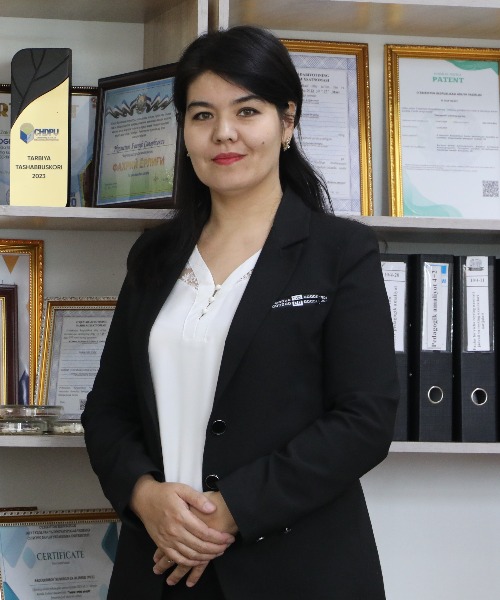
Tursunova Nilufar Muydinovna
Associate Professor of the Department
Doctor of Philosophy (PhD) in Biological Sciences
- Phone: +998717166805
- Email nilufar.azimova.85@inbox.ru

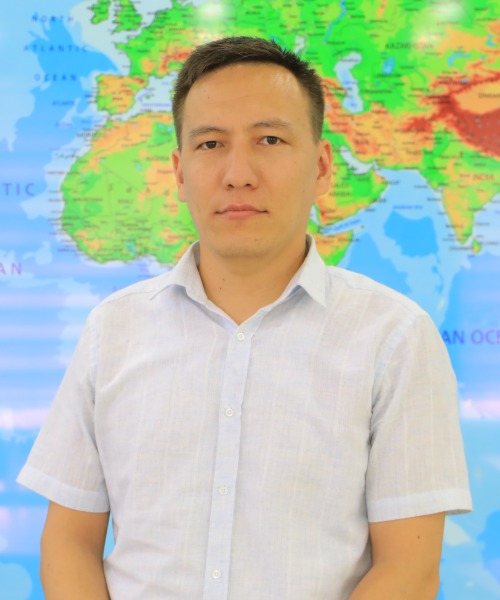
Zakirov Doniyor Utkirovich
Katta o‘qituvchi
- Phone: +998717166805
- Email d.zakirov@cspi.uz
B60510100 – Biology – Bachelor’s degree: Graduates of this specialty may carry out teaching activities in general secondary schools, academic lyceums, and colleges, as well as work in research institutes in the positions of junior research fellows.
M70510105 – Methods of Teaching Exact and Natural Sciences (Biology) – Master’s degree: Graduates may carry out teaching activities in higher education institutions and professional development institutes, work in research institutes in the positions of senior research fellows, and engage in scientific research activities.
D03.00.09 – General Genetics – Doctoral (PhD) programme: Scientific research is conducted in the fields of general genetics, followed by the defense of a Doctor of Philosophy (PhD) dissertation and the awarding of the PhD degree. Specialists who obtain this degree may conduct classes in general genetics in higher education institutions and engage in scientific research in this specialization.
D03.00.07 – Plant Physiology and Biochemistry – Doctoral (PhD) programme: Scientific research is conducted in the field of plant physiology and biochemistry, followed by the defense of a Doctor of Philosophy (PhD) dissertation and the awarding of the PhD degree. Specialists who obtain this degree may conduct classes in Plant Physiology and Plant Biochemistry in higher education institutions and engage in scientific research in this specialization.
The department offers the following courses:
For Bachelor’s students: Cytology, Histology and Embryology; Fundamentals of Genetics and Breeding; Fundamentals of Genetics and Genomics; Genomics and Bioinformatics; Methods of Teaching Biology; Innovative Educational Technologies in Biology; Evolutionary Biology.
For Master’s students: Development of the Organic World and Anthropology; Human Genetics; Methods of Teaching Specialized Disciplines; Biogeography.
The department hosts the Research Center
“Plant Genetics and Biotechnology”, which conducts studies in the following areas of biology:
Development of the fundamentals for synthesizing new cotton genotypes through genomic selection and transgenic modification, ensuring their agroecological adaptability;
Substantiation of methods for obtaining genetically diversified donor lines based on interspecific hybridization of foreign chickpea germplasm with local varieties and metagenomic analysis;
Development of the principles for forming genetically diversified inbred lines of common bean based on somatic hybridization of locally adapted varieties and proteomic profiling;
Elaboration of new genetic variants of flax and sesame through phylogenetic analysis using molecular markers and biotechnological modification;
Identification and integration of innovative genetic sources for breeding research based on the study of the evolutionary dynamics of the wheat gene pool and metagenomic monitoring of biodiversity;
Analysis of the scientific semantics of biodiversity formed in the course of evolution using ontogenetic and phylogenetic models, and generation of new epigenetic resources for genetic and breeding research;
Investigation of the correlation between biochemical composition and genetic characteristics of various medicinal plants traditionally used in the national economy of Uzbekistan in the assessment of their pharmacological properties;
Conducting diverse genetic analyses in animal sex genetics and monitoring their adaptability to various stress conditions.
International Cooperation and Academic Exchange Programs
International partner universities (Erasmus+, DAAD, Fulbright, Tempus, and other exchange programs).
For the purpose of joint project development, organization of scientific internships, and academic training, the department has established international cooperation with a number of universities in Europe and CIS countries.
Mukhtar Auezov South Kazakhstan State University (Kazakhstan);
SIIRT University (Turkey);
Al-Farabi Kazakh National University (Kazakhstan).
International conferences are organized for students and faculty members.
Bachelor's Degree
Cytology, Histology, and Embryology
Biogeography
Evolutionary Biology
Epigenetics
Genetics and Genomics
STEAM Technologies in Biology Teaching
Biology Teaching Methods
Fundamentals of Genetics and Selection
Innovative Educational Technologies in Biology
School Records and School Regulations
Evolutionary Biology
Genomics and Bioinformatics
Methods of Preparing Students for the International Assessment System
Master's Degree
Methods of Teaching Specialized Subjects
Conceptual Foundations of Biology
Development and Anthropology of the Organic World
Biogeography
Epigenetics
Conceptual Foundations of Biology
Human Genetics