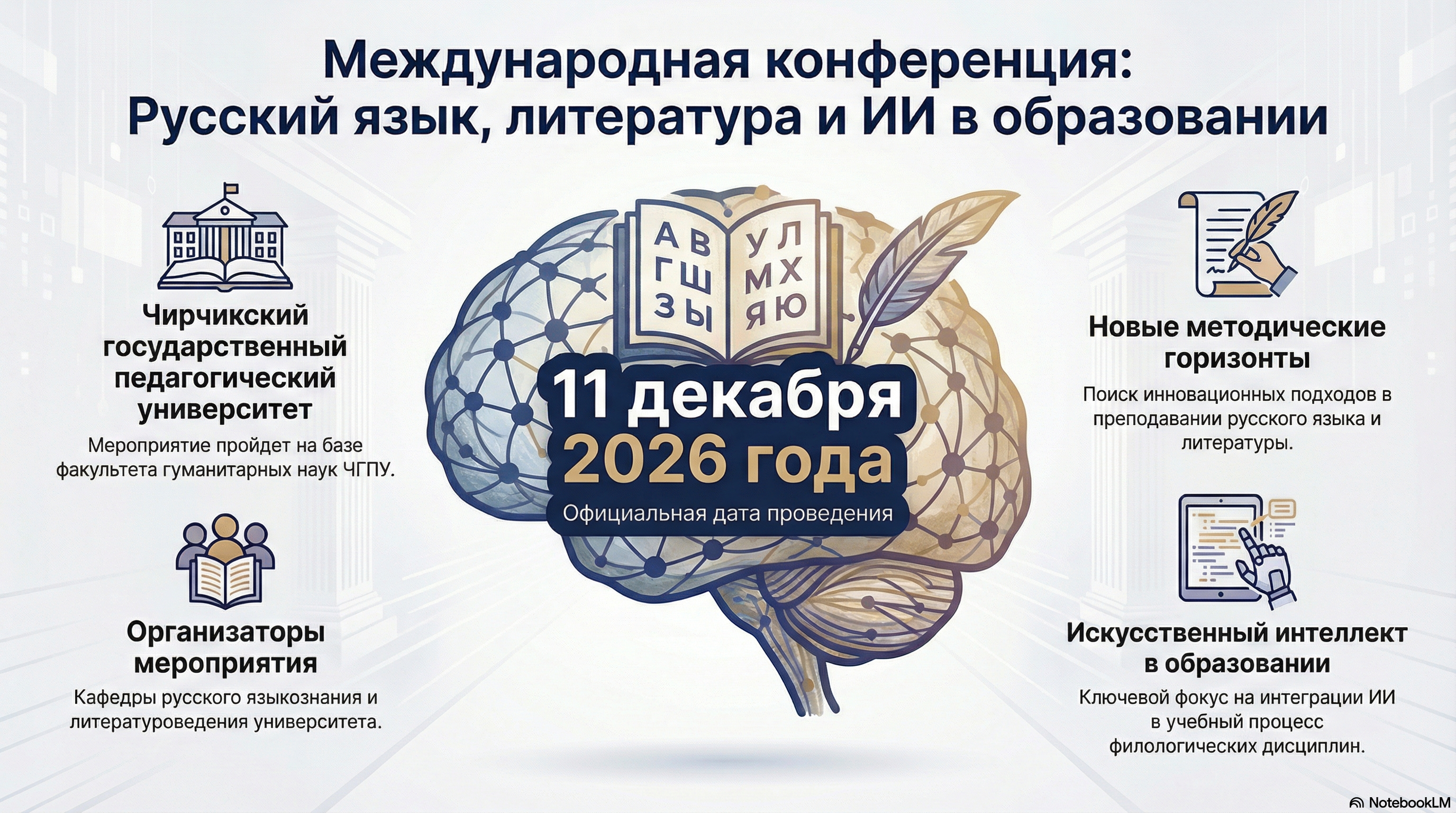
ABOUT THE CONFERENCE
Contemporary humanities education is undergoing a period of profound transformation. Digitalization, artificial intelligence, new methodological models, and interdisciplinary approaches are not merely complementing traditional forms of education but are actively shaping a new educational reality.
In this context, the conference serves as a professional platform for academic dialogue, the exchange of scholarly ideas and pedagogical experience, and the reflection on current trends in teaching the Russian language and literature in general and higher education.
The purpose of the conference is to discuss modern methodological, linguistic, and literary approaches to teaching the Russian language and literature in the context of the digital transformation of education, as well as to explore the potential of artificial intelligence technologies in educational and research activities.
Conference Themes
Main thematic areas of the conference include:
Innovative methodologies for teaching the Russian language and literature in general and higher education;
Artificial intelligence and the digitalization of humanities education;
The use of AI tools in teaching the Russian language and literature: practical experience and future prospects;
Interdisciplinary approaches to the study of language, literature, and educational technologies;
Creative Laboratory: pedagogical workshops, model lessons, and author-developed educational practices.
A Distinctive Feature of the Conference
A distinctive feature of the conference will be the Creative Laboratory, focused on showcasing best pedagogical practices.
Within the framework of the Creative Laboratory, the following will be presented:
Model (open) lessons;
Master classes conducted by leading university lecturers and school teachers;
Author-developed teaching methodologies and educational case studies;
Interactive formats of professional communication.
5+
Speakers
100+
Participants
5+
Topics