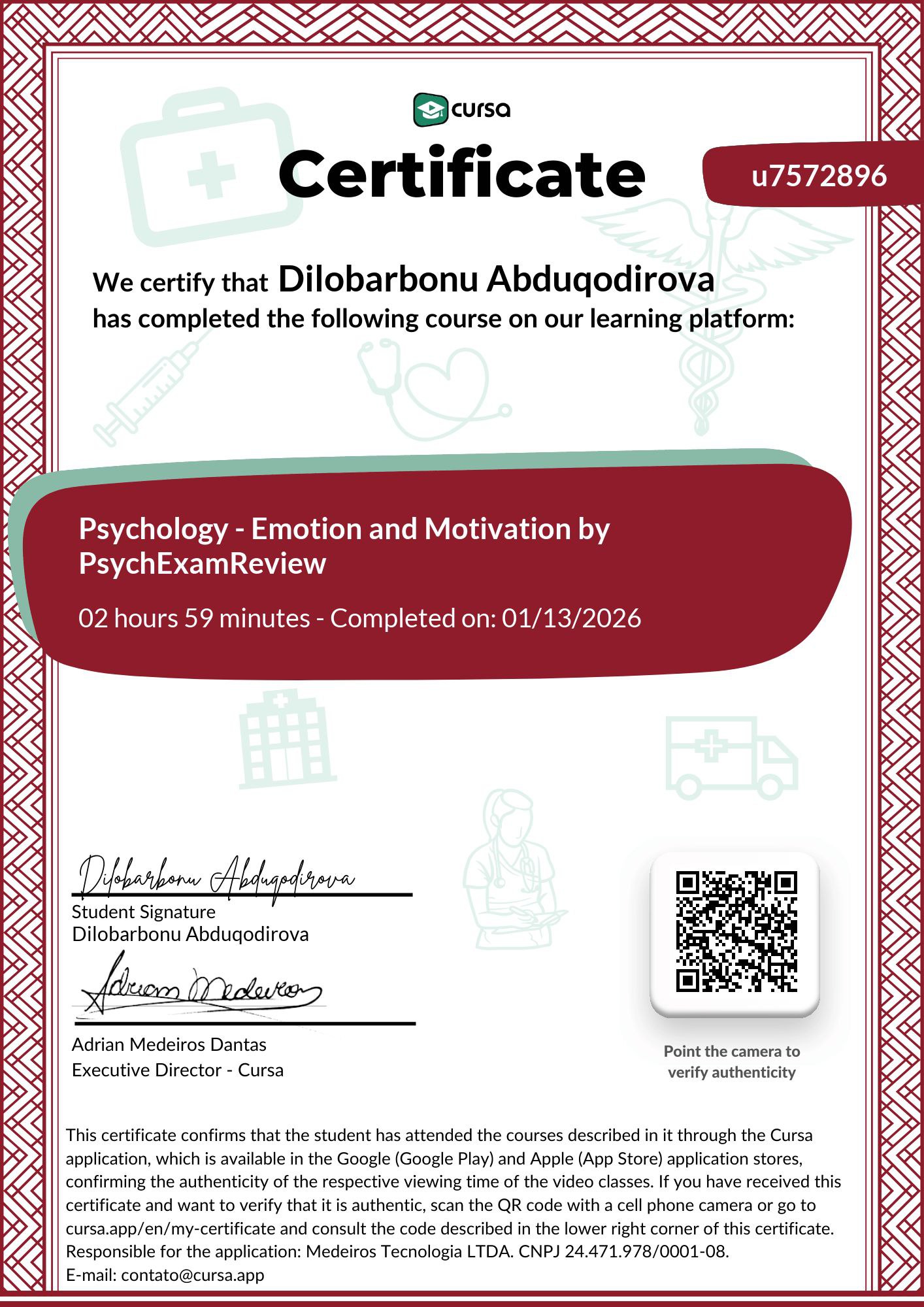
Abduqodirova Dilobarbonu Erkinjon qizi was born on 8 February 1992 in Bag’dod district, Fergana region. She is of Uzbek nationality and a citizen of the Republic of Uzbekistan.
She completed her secondary education at School No. 26 in Bag’dod district from 1999 to 2010. From 2018 to 2023, she studied at the Chirchiq State Pedagogical University, Faculty of Preschool Education, specialising in Preschool Education.
From 2019 to 2024, she served as the Head of the Office at the Department of Social Sciences, Faculty of Humanities, at the Chirchiq State Pedagogical University. In 2024, she worked as an Advisor to the Director at the Chirchiq Medical Technical College LLC.
Between 2023 and 2024, she completed her Master’s degree in Psychology (specialisation: Types of Activities) at the University of Exact and Social Sciences. Since 2024, she has been working as a Lecturer in the Department of Psychology at Chirchiq State Pedagogical University.
She is married and has two children.
Conference Theses (International Conferences)
THE ROLE OF EMOTIONAL CREATIVITY IN STUDENTS' DECISION-MAKING
Dilobarbonu Abduqodirova Teacher, Department of Psychology, Chirchik State Pedagogical University
Abduqodirova, D., & Pardaboyeva, M. (September 2024). The Role of Emotional Creativity in Students’ Decision-Making. Proceedings of the International Conference on Natural and Social-Humanitarian Sciences (Volume 1, Issue 7, pp. 27–30).
Articles in Local Peer-Reviewed Journals
Developing Emotional Creativity Traits in Students
Project Leader: Abduqodirova Dilobarbonu Erkinjon qizi
Number of participating students: 17
Psychological training sessions within the project aim to prevent the following issues:
1. Stress and Fatigue Syndrome
The training sessions teach stress management techniques, relaxation methods, and ways to restore emotional balance. As a result, the risk of chronic stress, depression, and professional burnout in the future is reduced.
2. Communication and Social Adaptation Difficulties
Participants develop teamwork skills, conflict resolution strategies, and effective communication abilities. This helps prevent social isolation, family conflicts, and workplace disputes in the future.
3. Low Self-Confidence and Motivation
The training helps students recognize their personal resources, set goals, and increase motivation. Consequently, it prevents future issues such as lack of initiative, fear of failure, and feelings of worthlessness.
4. Difficulties in Emotional Regulation
Psychological training teaches participants to control their emotions and avoid impulsive decisions. This reduces the likelihood of domestic violence, aggression, and negative habits such as smoking and alcoholism.
5. Academic and Professional Underachievement
Training sessions include time management, concentration techniques, creative thinking, and decision-making in challenging situations. This prevents poor academic performance and reduced efficiency at work in the future.
6. Family and Personal Life Problems
Psychological sessions strengthen skills in mutual respect, empathy, and constructive conflict resolution. As a result, future issues such as divorce, family misunderstandings, and parenting difficulties are reduced.
7. Prevention of Psychological Disorders
By developing self-awareness and healthy thinking skills, the training helps prevent the development of anxiety disorders, depression, and phobias.
NEUROGRAPHICS – SUBCONSCIOUS MAP
Neurographic sessions help prevent the following problems in the future:
Reducing Stress and Anxiety
They teach how to manage pressure from studies, work, or personal life and restore emotional balance.
Difficulties in Decision-Making
They help to make more confident choices in complex life situations (such as career or life path decisions).
Motivation and Self-Development
They enable clear goal setting and strengthen internal resources necessary for achieving them.
Problems in Relationships
By learning to manage emotions, participants improve relationships with family, friends, and colleagues.
Psychosomatic Problems
They help reduce physical discomfort caused by mental tension (such as headaches, insomnia, and chronic fatigue).
Developing Creative Thinking
They foster innovative thinking and improve the ability to solve new problems in future projects and creative tasks.
Self-Awareness and Self-Confidence
Individuals learn to overcome internal barriers and make more independent and confident decisions in the future.